Few dive sites capture the essence of Raja Ampat quite like Mike’s Point, a historically renowned site within the legendary Dampier Strait. Famous for its dramatic underwater scenery, powerful currents, and diverse marine life, it consistently attracts seasoned divers. At the heart of the Coral Triangle, Raja Ampat boasts the highest recorded marine biodiversity on the planet, and Mike’s Point stands as a prime example of the region's natural wonder.

The Heart of the Dampier Strait

Mike’s Point lies just off Kerupiar Island, positioned squarely within the Dampier Strait, the most dynamic marine corridor in Raja Ampat. This narrow channel funnels water between the Pacific and Indian Oceans, creating strong tidal movement that brings nutrient-rich currents directly to the reef. These nutrients fuel plankton growth, which in turn supports everything from tiny reef fish to large pelagic species.

The Dampier Strait’s constant water movement is precisely why Mike’s Point remains so productive year-round, drawing life to its walls and slopes in remarkable density.

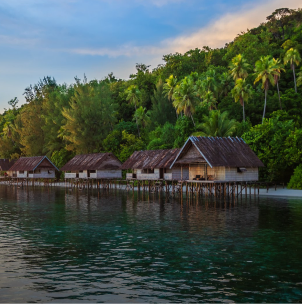
Its central location means easy boat access from Sorido Bay Resort and Kri Eco Resort, both strategically placed to reach the area quickly and safely. The proximity allows dive guides to time entries carefully around tides, ensuring divers experience the site at its most vibrant.

Fun Fact: The Story Behind Mike’s Point

Named after the son of Papua Diving’s founder, Max Ammer, Mike’s Point is a reef known for its large overhangs, which are home to soft corals and sweetlips. On the reef top, divers are greeted by large schools of fish moving across the shallow corals. The site was explored, mapped, and named by Max Ammer during the early days of diving exploration in Raja Ampat.

At that time, much of the Dampier Strait was still largely unknown. Mike’s Point stood out for its strong currents, dramatic reef shape, and consistent marine life. Naming the site after his son reflected a personal connection, as well as a long-term commitment to understanding and protecting these reefs.

The reef’s unusual structure has an even older origin. During the Second World War, the U.S. Air Force reportedly mistook the area for a Japanese ship and bombed it. The impacts reshaped the reef, carving grooves and cave-like formations into the wall that remain visible today and give the site its distinctive character. Divers looking for a little bit of thrill can dive into the short tunnels and swim through the channel in the unique island formation at the top of the reef. 

These grooves and overhangs now provide shelter for reef fish and critters, contributing to the rich biodiversity found along the slopes and plateau. Mike’s Point is one of several iconic sites explored and named by Max Ammer, including Melissa’s Garden, named after his daughter and now recognised as one of the top dive sites in Raja Ampat for its extraordinary coral cover and biodiversity. Together, these sites reflect Papua Diving’s role as pioneers of diving and sustainable tourism in the region.

Dramatic and Diverse Underwater Topography

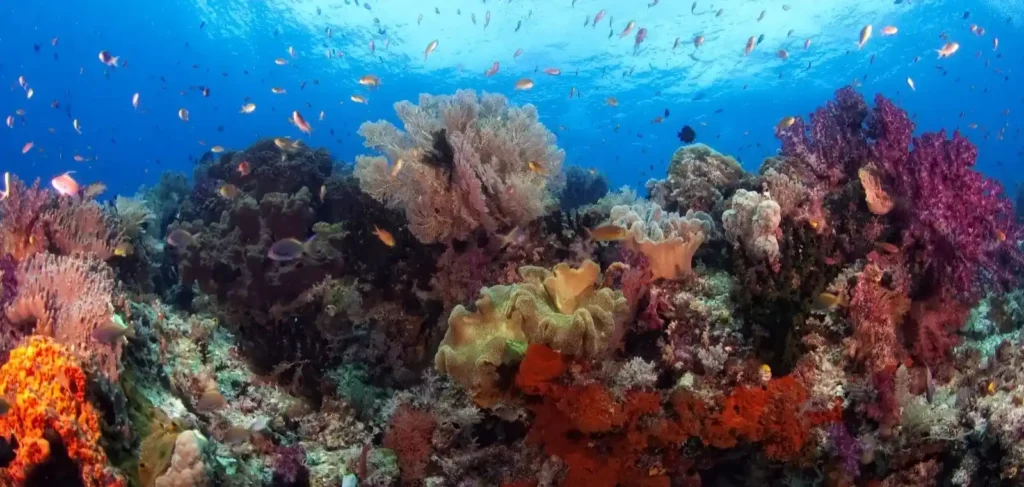
Descending at Mike’s Point feels like entering a living amphitheater. The reef drops away into steep vertical walls, punctuated by overhangs and rocky crevices that shelter marine life from the current. These dramatic structures create constant visual interest, drawing the eye deeper while offering protected pockets to pause and observe.

Lower down, the wall transitions into sloping reef areas, which are ideal for safety stops and slow exploration. This variation means a single dive can feel like several dives in one, moving from exposed current-washed faces to calmer, coral-rich shallows. The complexity of the terrain also enhances biodiversity, providing habitats for both large predators and delicate macro species.

Exceptionally Diverse Marine Life

Marine life is the true star of Mike’s Point Raja Ampat. Schools of fusiliers and jacks often gather in dense clouds, moving in unison as currents sweep past the reef. Their presence attracts predators, and sightings of blacktip and whitetip reef sharks are common, patrolling the edges with effortless grace.

Divers frequently encounter green and hawksbill turtles, rays gliding along the wall, and even sea snakes weaving through coral heads. Closer inspection reveals a hidden world of macro life, from nudibranchs to cryptic reef fish tucked into crevices. This balance between big-animal encounters and intricate details makes Mike’s Point particularly rewarding for underwater photographers and naturalists.

Best Suited for Intermediate to Advanced Divers

While breathtaking, Mike’s Point is not a passive dive. Changing currents, depth, and wall-diving conditions mean it is best suited for intermediate to advanced divers with solid buoyancy control. Currents can shift during the dive, and managing position along the wall requires awareness and experience.

All divers, whether beginner or experienced, dive Mike’s Point under the guidance of professional dive guides, as required in Indonesia. Beginners can also join some dives when carefully planned at the right time to ensure easier conditions. Thanks to our diving expertise of Raja Ampat Islands, we make sure every dive is enjoyable and safe for everyone.

Diving Mike’s Point with Papua Diving Resorts

Diving at Mike’s Point with Papua Diving Resorts brings together unmatched expertise and immersive experiences. For those looking to refine their underwater photography skills, the Raja Ampat SEACAM Center and Underwater Photography Workshops provide expert guidance, helping you capture the site’s dynamic action and intricate macro details with precision.

As a premier base for exploring the Dampier Strait, Sorido Bay Resort offers both luxurious comfort and unbeatable proximity to legendary dive sites like Mike’s Point. Alternatively, Kri Eco Resort provides an eco-conscious, sustainable option, perfectly positioned to explore this remarkable reef while supporting conservation efforts. Whichever you choose, you will benefit from our deep knowledge of the area and a commitment to making every dive unforgettable.

Frequently Asked Questions About Mike’s Point in The Raja Ampat Islands

Where is Mike’s Point located?

Mike’s Point is located near Kerupiar Island in the heart of the Dampier Strait, Raja Ampat. This central position places it directly in the path of nutrient-rich currents that flow between the Pacific and Indian Oceans, making it one of the most biologically productive dive sites in the region.

What marine life can you see at Mike’s Point in Raja Ampat?

Divers at Mike’s Point regularly encounter large schools of fusiliers and jacks, along with blacktip and whitetip reef sharks cruising the reef edge. Turtles, rays, and sea snakes are also common sightings, while careful observation of the coral and reef structures reveals a wealth of macro life hidden among crevices and overhangs.

Is Mike’s Point suitable for beginner divers?

Mike’s Point is generally best suited for intermediate to advanced divers due to changing currents, wall depth, and the need for good buoyancy control. Beginner divers may still enjoy the site when conditions are calm, but only under close supervision and professional guidance from experienced dive teams.

How deep is Mike’s Point?

The reef at Mike’s Point begins in shallow water and drops into a reef wall that descends to depths of over 30 to 40 meters. Most dives are conducted along the upper sections of the wall and sloping reef, with depth carefully managed according to diver experience and conditions.

When is the best time to dive at Mike's Point in Raja Ampat?

You can dive at Mike's Point all year round, but timing the dive around the right tide is crucial, depending on the type of dive and the diver's experience level. Reduced currents during certain tides often improve visibility and make the dive more accessible, while stronger currents at other times can intensify fish activity and create more dynamic conditions.