


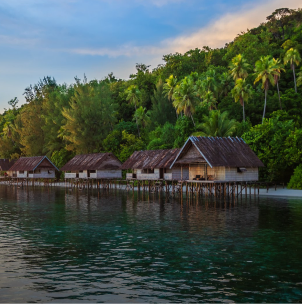


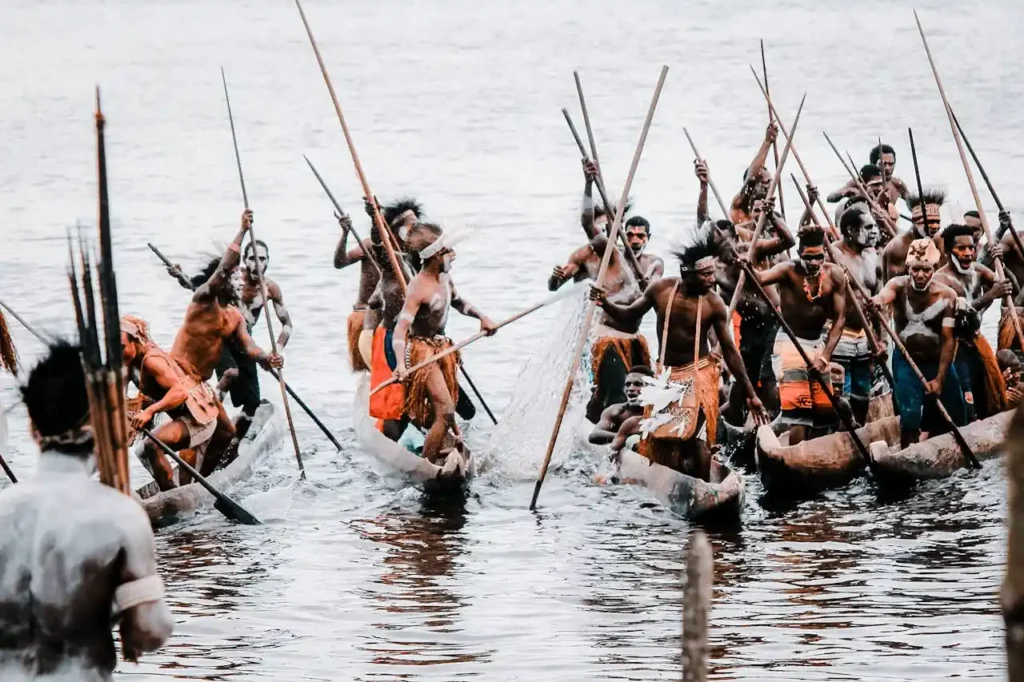
The people of Raja Ampat, mostly Indigenous Papuan communities, live in harmony with the sea. Small villages dot the coastlines. Daily life is shaped by centuries-old maritime traditions. Canoe building, sago harvesting, fishing, and intricate woodcarving remain an integral part of the culture.
Papua Diving Resort’s guests often have the opportunity to visit local villages during surface intervals. These visits allow for genuine cultural exchange and offer ways to support the local economy through handmade crafts and warm conversation.
Importantly, local communities are at the forefront of marine conservation. They participate in managing protected zones, monitor reef health, and enforce no-fishing regulations. Their stewardship has become a model of how community-led conservation can protect biodiversity while benefiting future generations.
Raja Ampat’s equatorial climate is warm and stable year-round. Air temperatures average 27–30°C, and water temperatures range from 28–30°C.
The best diving conditions typically occur between October and April, when seas are calmest. Between June and September, wind conditions increase slightly in exposed areas but do not affect diving in the protected Dampier Strait. With plankton levels dropping, this period also offers some of the clearest visibility. Seasonal changes bring different highlights, from manta ray migrations to coral spawning events.
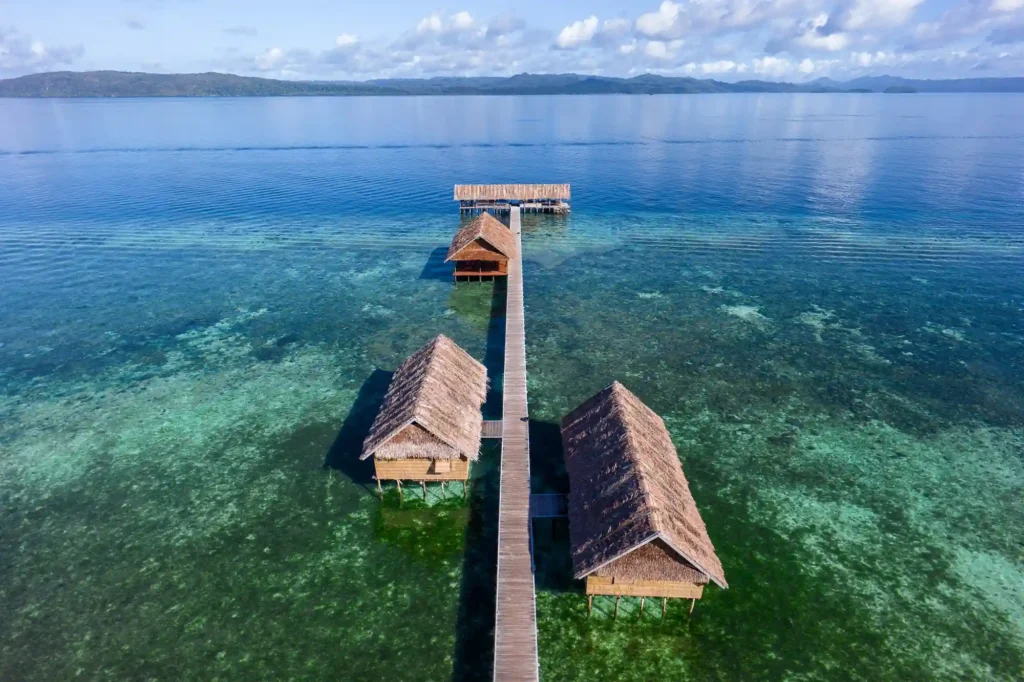
Sorido Bay Resort and Kri Eco Resort were built with conservation in mind. Each resort uses natural materials, avoids single-use plastics, and relies on proper waste management and water-saving systems. Fixed moorings prevent reef damage, and divers are briefed on low-impact diving techniques.
We not only employ members of the local Papuan community but also invest in their training, from dive instruction and boat mechanics to carpentry and eco-tourism skills, ensuring long-term careers built on conservation and pride in their homeland.
Our SEACAM Center at Sorido Bay Resort equips underwater photographers with the gear, training, and local insight through Underwater Photography Workshops to capture this rare underwater world.
Staying at our resorts means contributing directly to conservation, local education, and sustainable livelihoods, all while experiencing world-class diving and warm hospitality.
Visitors typically fly to Sorong, the gateway city to Raja Ampat. From there, a resort-arranged boat transfer completes the journey. The resorts handle all logistics, including marine park permits.
Packing tips:
All guests receive guidance on responsible reef behavior, local customs, and environmental best practices.


