

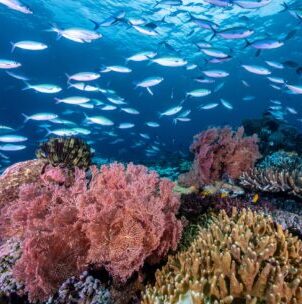


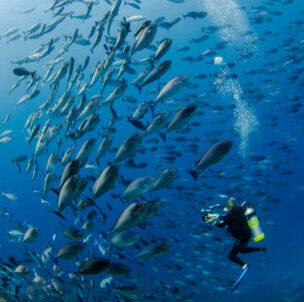
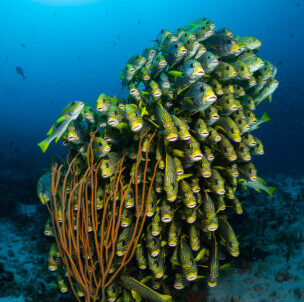
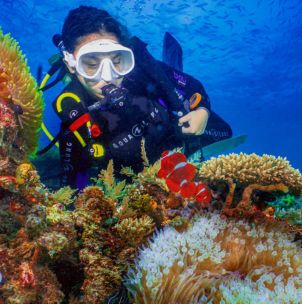
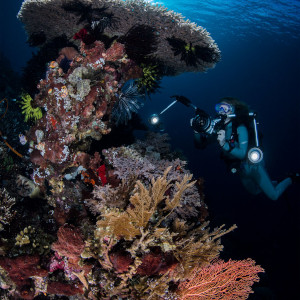




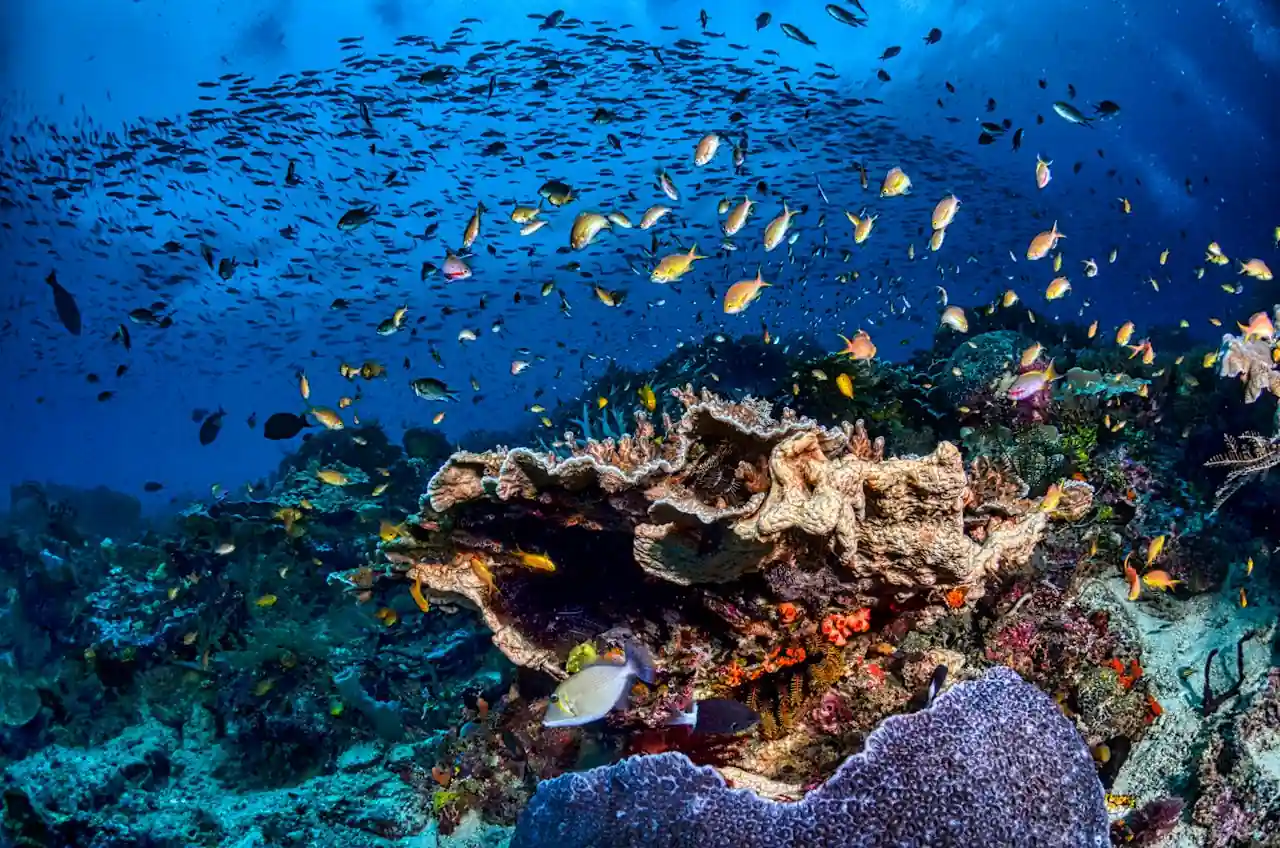
Although they resemble plants or rocks, corals are actually colonies of tiny animals called polyps. These organisms extract calcium carbonate from seawater to build the limestone structures that form the foundation of the reef.
Each polyp hosts microscopic algae called zooxanthellae, which photosynthesize and provide energy to the coral. In return, the coral offers protection and access to sunlight. This partnership not only fuels reef growth but also gives corals their vibrant colors, explaining why healthy reefs like those in Raja Ampat appear so luminous.
The sheer diversity of coral forms here shapes the reef’s structure and supports an incredible range of marine life.
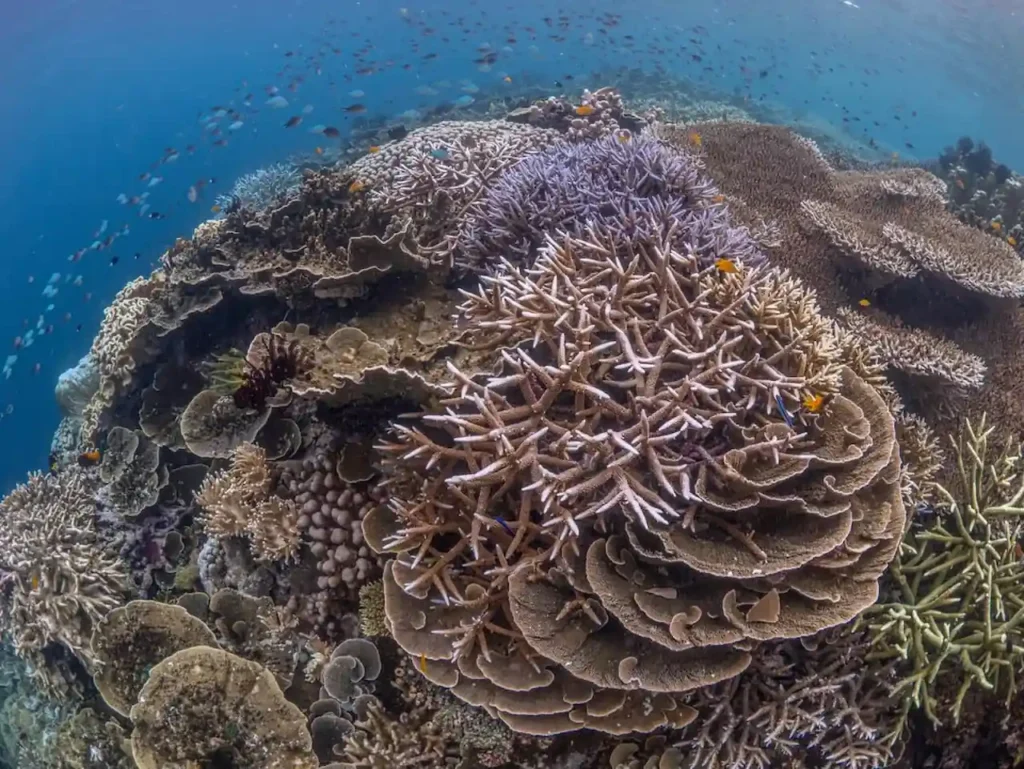
Source: Nicole Helgason
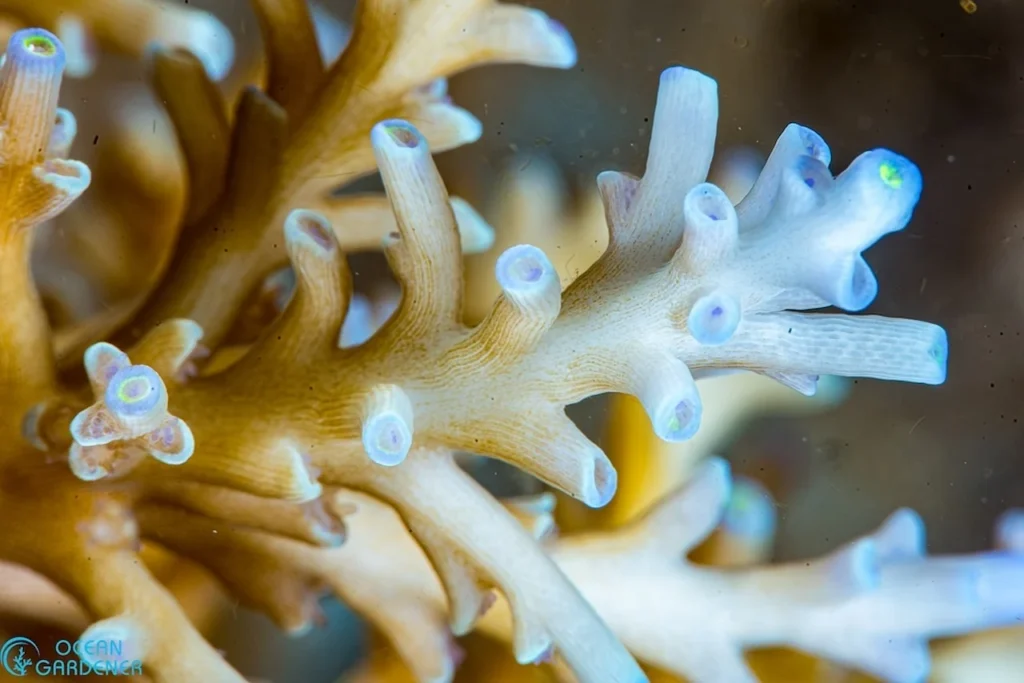
Known for their fast growth and iconic forms, branching corals like Acropora shape the structure of many Raja Ampat reefs. With finger-like branches and expansive tables, they provide shelter for fish and stunning visuals for divers.
Includes: staghorn, elkhorn, and table corals (Acropora cervicornis, A. palmata)
Notable site: Melissa’s Garden
Source: Laura Gs
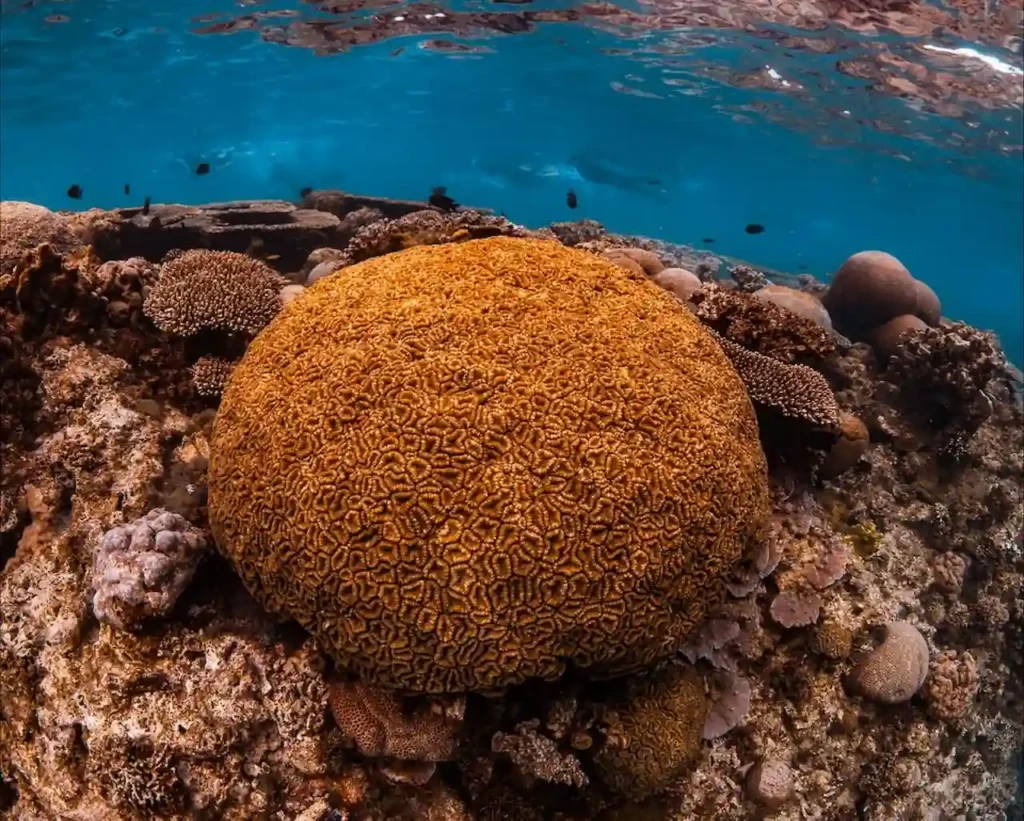
Slow-growing and resilient, these boulder-like corals form the foundations of many long-lived reef structures. Their grooved and patterned surfaces host tiny marine life and make ideal subjects for macro photography.
Includes: brain corals (Platygyra), Porites lobata, Diploastrea heliopora
Layered and architectural, these corals grow like shelves along reef slopes and plateaus. Their flattened shapes reflect light beautifully, adding depth and elegance to shallow reefscapes.
Includes: Montipora foliosa, Pavona cactus, Turbinaria reniformis
Source: Sonia Evolution
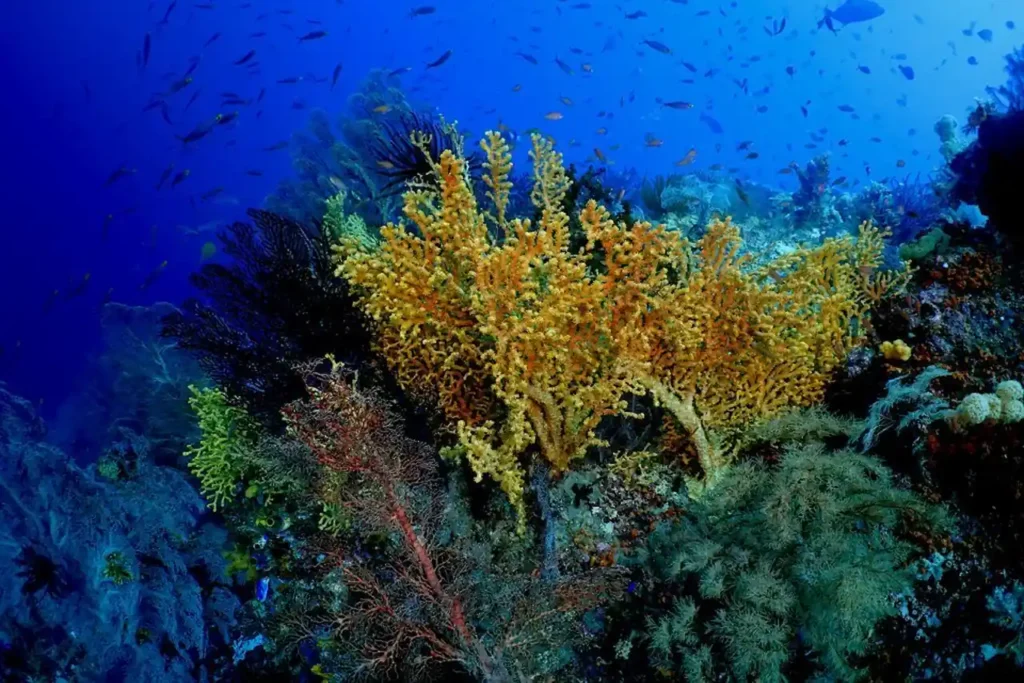
Graceful and flexible, these corals bring movement and vibrant color to Raja Ampat’s underwater scenery. Swaying gently with the current, they enhance every dive with organic motion and texture.
Includes: leather corals (Sarcophyton), sea fans (Annella, Melithaea), Dendronephthya
Thriving even under stress, these corals withstand warmer temperatures and help reefs recover after bleaching events. Their subtle beauty often hides their ecological importance.
Includes: Porites lobata, Porites cylindrica
Source: Ocean Gardener
Even in remote and thriving ecosystems like Raja Ampat, coral reefs are not immune to the pressures of a changing climate. One of the most significant threats facing corals worldwide is coral bleaching, a phenomenon that occurs when corals become stressed, typically from elevated sea temperatures, and expel the symbiotic algae (zooxanthellae) living within their tissues.
The primary causes of coral bleaching include:
Many coral species in Raja Ampat are considered among the most resilient ever documented by scientists. Their ability to withstand long hours of direct sunlight during extreme low tides, yet remain healthy, is a major reason for this strength. The nutrient-rich currents flowing through the Dampier Strait also help sustain and nourish these reefs. Even so, resilience does not mean immunity. Factors like nutrification can still weaken corals, which is why responsible waste management, along with reducing local stressors such as overfishing and anchor damage, is essential to keeping these ecosystems thriving.
Corals are the unsung engineers of the ocean. They provide shelter, spawning grounds, and food for thousands of marine species. In Raja Ampat, where coral diversity is at its peak, protecting these ecosystems is essential not only for the region, but for global ocean health.
Papua Diving Resorts, through its conservation initiative RARCC (Raja Ampat Research & Conservation Center), actively protects local coral reefs. Conservation efforts include:
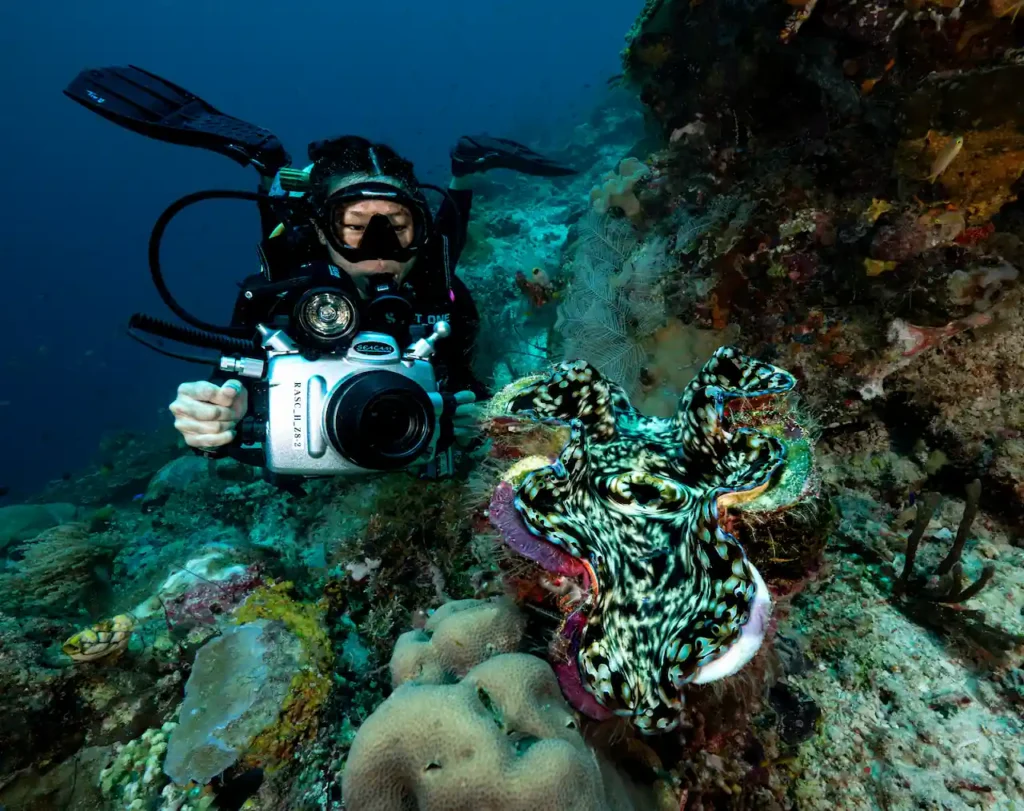
The SEACAM Center plays a hands-on role in supporting these goals by promoting ethical underwater photography and offering training in low-impact diving techniques.
Here’s how to make the most of your coral-focused adventure:
Source: Don Silcock
Staying at Sorido Bay Resort or Kri Eco Resort means you’re already within reach of Raja Ampat’s finest reefs. Whether you're a beginner or a seasoned shooter, these resorts provide expert support and exclusive access.
At the SEACAM Center located at Sorido Bay:
Guests not only gain better images, but also become more thoughtful, informed divers.
Raja Ampat’s coral reefs are not just beautiful: they are resilient ecosystems shaped by time, biodiversity, and careful protection. As pioneers of diving in the region, Papua Diving Resorts has long championed responsible tourism, conservation, and meaningful guest experiences.
When you book your stay at Sorido Bay Resort or Kri Eco Resort, you’re choosing more than world-class diving. You’re supporting initiatives like RARCC, a leading conservation program focused on coral restoration, sustainable community development, waste management, organic gardening, and reef-safe operations.
With the SEACAM Center located in Sorido Bay Resort and our underwater photography workshops guiding your underwater photography journey, your time here becomes both inspiring and impactful.
Ready to experience the heart of Raja Ampat, above and below the surface?
Book your stay with Papua Diving Resorts and take part in protecting one of Earth’s last untouched marine sanctuaries.