There are few places on Earth where the ocean feels as alive as it does in Raja Ampat. Suspended in the heart of the Coral Triangle, this remote Indonesian archipelago is often described as the most biodiverse marine ecosystem on the planet, and for good reason. Beneath its surface lies a world where coral reefs flourish in extraordinary abundance and marine life moves in dazzling, ever-changing formations.

Among the many celebrated Raja Ampat dive sites, Sardine Reef stands out as one of the most iconic. Divers who descend here often recall a singular sensation, being completely surrounded by fish, as if the ocean itself is in motion. Known for its immense schools and vibrant coral coverage, Sardine Reef in Raja Ampat delivers an experience that is both humbling and exhilarating, one that lingers long after you surface.

Where Is Sardine Reef in Raja Ampat?

Sardine Reef is located in the Dampier Strait, one of the most dynamic and nutrient-rich channels in Raja Ampat. Just a short boat ride from Kri Island, it is easily accessible from nearby resorts, making it a regular highlight for divers staying in the area.

The site was famously explored and named by Max Ammer, a pioneer of diving in Raja Ampat, who described his first experience here as being enveloped by such dense schools of fish that it felt like being packed tightly inside a can of sardines. The name has endured, even though sardines themselves are not the stars of the show.

Positioned within a current-swept channel, Sardine Reef benefits from a constant flow of nutrient-rich water. This steady influx fuels an incredible concentration of marine life, transforming the reef into a thriving underwater metropolis.

What Makes Sardine Reef Dive Site Unique?

At its core, Sardine Reef is a submerged pinnacle that rises dramatically from depths of around 30 meters to just 5 meters below the surface. This seamount structure creates a vertical playground for marine life, where every level of the water column feels alive with movement.

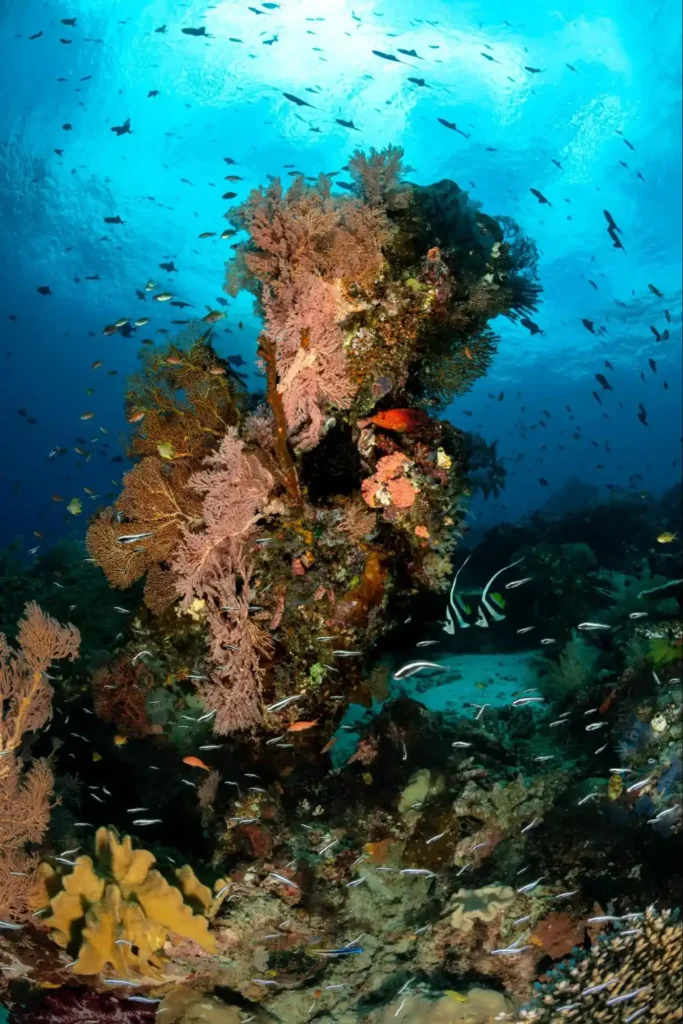
The reef itself is adorned with soft corals, sea fans, and vibrant reef fish, forming a kaleidoscope of color that contrasts beautifully with the open blue. But what truly defines the sardine reef dive site is its density of fish. Despite its name, the spectacle comes from countless fusiliers, snappers, and other schooling species that move in synchronized patterns, shifting and reshaping like a living cloud.

Currents play a vital role here. While they can be strong, they are also the lifeblood of the ecosystem, bringing nutrients that sustain both coral growth and the incredible biomass of fish. For divers, this means that no two dives are ever quite the same, and each descent offers a new composition of life and motion.

Marine Life at Sardine Reef

Sardine Reef Raja Ampat

To dive Sardine Reef is to witness the ocean at its most abundant. Schools of fusiliers, surgeonfish, and snappers dominate the scene, weaving through the reef in mesmerizing formations. Bannerfish hover gracefully above coral heads, while anthias add flashes of orange and pink to the already vibrant landscape.

Predators are never far away. Trevallies dart through the schools with sudden bursts of speed, while barracuda and tuna patrol the blue, adding a sense of anticipation to every moment. Sharks are also frequent visitors, with blacktip and whitetip reef sharks often seen cruising the currents. On occasion, larger reef sharks make an appearance, reinforcing the sense that this is a place where the natural order remains beautifully intact.

Closer to the reef, a different world reveals itself. Patient observers may spot pygmy seahorses clinging to sea fans, or nudibranchs inching across coral surfaces in intricate patterns. Tucked beneath ledges or resting on sandy patches, the unmistakable silhouette of a wobbegong shark can sometimes be found, perfectly camouflaged against the reef.

Diving Conditions at Sardine Reef

Diving Sardine Reef Raja Ampat is as much about reading the ocean as it is about observing it. The site ranges in depth from 5 to 30 meters, making it suitable for a variety of dive profiles. Visibility is typically excellent, allowing divers to fully appreciate the scale of the fish schools.

Water temperatures remain warm year-round, creating comfortable conditions for extended dives. However, currents can be strong and variable, shifting with the tides and adding an element of unpredictability. These currents are what make Sardine Reef so vibrant, but they also require awareness and experience.

Best Time to Dive Sardine Reef

One of the remarkable aspects of Raja Ampat is that diving is possible throughout the year, and Sardine Reef is no exception. The site consistently offers impressive marine life encounters, regardless of the season.

That said, the best conditions often depend on tidal movements and current patterns rather than a specific time of year. Nutrient flow plays a key role in attracting fish, meaning that each dive can feel entirely different depending on the conditions of the day. This variability is part of what keeps divers returning, as there is always something new to discover.

Tips for Diving Sardine Reef

While Sardine Reef is accessible, it is best suited to intermediate and advanced divers due to the presence of strong currents. Experience with drift diving can greatly enhance the experience, allowing divers to move with the flow rather than against it.

Many divers choose to use reef hooks responsibly, securing themselves in place to observe the spectacle without disturbing the environment. For underwater photographers, a wide-angle lens is essential. The scale of the schooling fish and the dramatic reef structure call for a broader perspective, while the use of strobes helps bring out the rich colors of the coral and the shimmering movement of the fish. At Sardine Reef, it is not just about capturing a subject, but about revealing the full vibrancy of the scene.

Where to Stay for Diving Sardine Reef

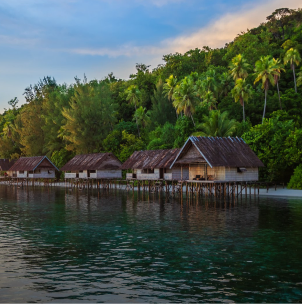
Staying close to the Dampier Strait offers the greatest access to Sardine Reef and other world-class dive sites. Papua Diving Resorts operates both Sorido Bay Resort and Kri Eco Resort, each offering a distinct yet equally eco-conscious experience rooted in sustainability and respect for the surrounding environment. Sorido Bay Resort blends refined comfort with immediate access to some of Raja Ampat’s most celebrated underwater locations, and is home to the Raja Ampat SEACAM Center, where photography enthusiasts can refine their skills or join specialized underwater photography workshops.

Just nearby, Kri Eco Resort offers a more relaxed and immersive stay, designed to bring guests closer to nature without compromising on access or experience. With both resorts positioned in the heart of the Dampier Strait, divers are only minutes from Sardine Reef, allowing for flexible dive planning and more time in the water exploring the richness of Raja Ampat.

Why Sardine Reef Is a Must-Visit Raja Ampat Dive Site

There are many extraordinary Raja Ampat dive sites, but Sardine Reef holds a special place among them. Its exceptional fish density, thriving coral ecosystem, and consistently dynamic conditions make it one of the most reliable locations for action-packed dives.

What sets it apart is not just the volume of marine life, but the way it surrounds you. Diving here is not about observing from a distance, it is about being immersed, becoming part of the movement, and witnessing the ocean in its most vibrant state.

An Unforgettable Dive Awaits

Sardine Reef Raja Ampat captures the essence of what makes this region so extraordinary, with its vibrant marine life and constant movement. Here, biodiversity is not an abstract concept but something you feel in every direction, in every movement of the water.

For those seeking a dive that captures the essence of Raja Ampat, its energy, its abundance, and its raw beauty, Sardine Reef is simply unmissable.

Discover Sardine Reef with Papua Diving Resorts and experience one of the most exciting and fish-rich dive sites in Raja Ampat, with direct access to world-class diving from Kri Island.

Book your stay today and begin your journey into one of the richest marine ecosystems on Earth, where every dive tells a new story beneath the surface.

Frequently Asked Questions About Sardine Reef Raja Ampat

Where is Sardine Reef in Raja Ampat?

Sardine Reef is located in the Dampier Strait near Kri Island, just a short boat ride from nearby dive resorts.

Why is Sardine Reef famous?

It is renowned for its massive schools of fish, rich coral coverage, and the sheer density of marine life concentrated around its pinnacle structure.

Is Sardine Reef suitable for beginners?

Due to strong and variable currents, it is generally recommended for intermediate to advanced divers with some drift diving experience.

When is the best time to dive Sardine Reef?

Diving is excellent year-round, with conditions largely influenced by tides and currents rather than a specific season.