
The Cuttlefish Research Project Revealing Raja Ampat’s Master of Disguise
A cuttlefish gliding over a reef in Raja Ampat can look like a completely different animal within seconds, a trick that pulled one marine scientist back to Papua Diving Resorts for years of fieldwork. New 2025 research reveals these cuttlefish use at least four hunting displays, including a passing-stripe pattern that works as motion camouflage rather than a conspicuous signal.
August 8, 2026
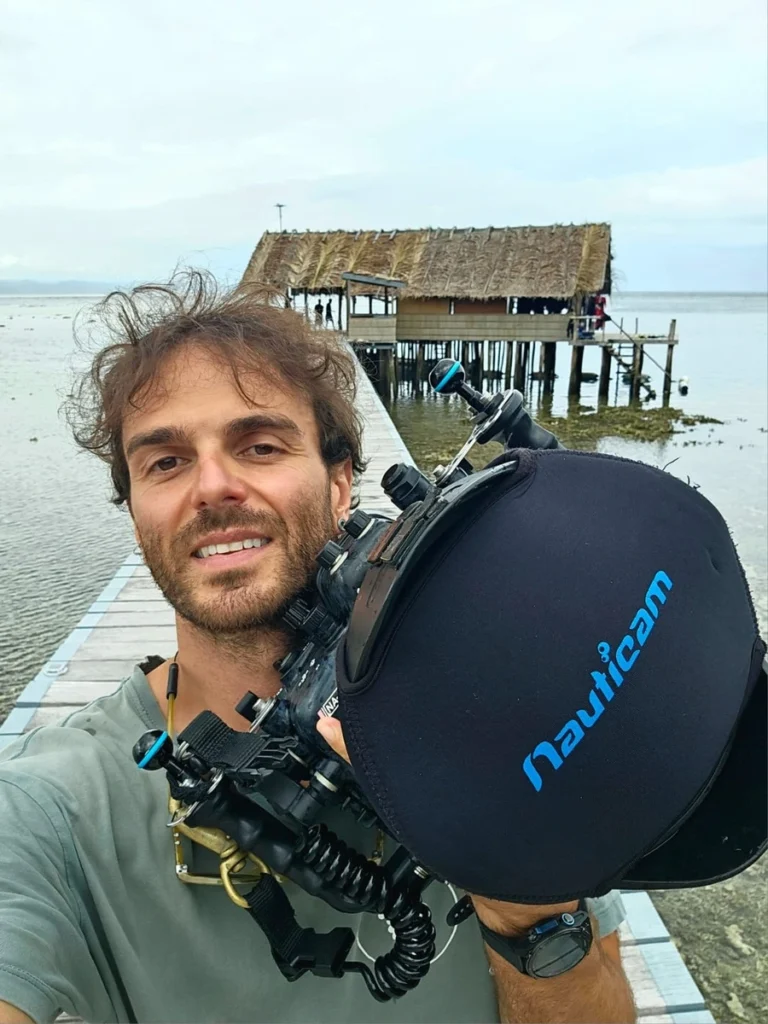
A cuttlefish drifting across the reef off Kri Island can look, in a matter of seconds, like a completely different animal. That trick is what pulled marine visual ecologist Dr. Matteo Santon back to Raja Ampat for years of underwater fieldwork, and it now sits behind new cuttlefish research in Raja Ampat that guests can watch unfold on their own dives.
Dr. Santon, a senior researcher at the University of Padova with a research affiliation at the University of Bristol, has spent several years studying broadclub cuttlefish on the reefs around Papua Diving Resorts, diving with the same individual animals repeatedly to document how they hunt. His 2025 research, published in Science Advances and Ecology, found that these cuttlefish use at least four distinct hunting displays, including a passing-stripe pattern that works as motion camouflage rather than a conspicuous signal.
All of it was filmed on wild cuttlefish in Raja Ampat's reefs, the same waters guests dive every day.
Who Is Studying Cuttlefish in Raja Ampat
Dr. Matteo Santon is a sensory biologist and marine visual ecologist who studies how animals use color, pattern, and vision to hunt or hide. He is a senior researcher at the University of Padova in Italy, with a research affiliation at the University of Bristol's Ecology of Vision group.
Santon first arrived in Raja Ampat at the end of 2022, after colleagues described the broadclub cuttlefish to him: a large, reef-associated species known for elaborate hunting displays rarely seen up close. His research team includes co-authors Jolyon Troscianko and Martin How of the University of Bristol, along with Charlie Heatubun of the University of Papua, who helped arrange research permits and field logistics in Indonesia.
What the Research Found: Motion Camouflage in Plain Sight
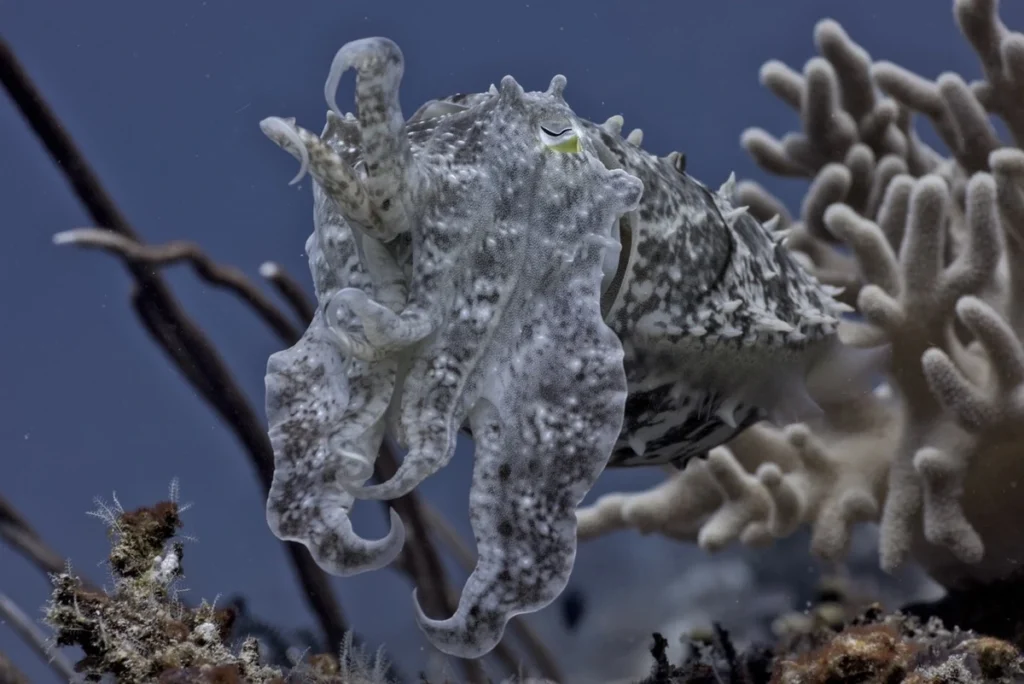
Two 2025 papers, published in Science Advances and Ecology, document how broadclub cuttlefish hunt on Raja Ampat's reefs. One display, the passing-stripe pattern, sends dark bands rippling across the cuttlefish's body as it approaches prey.
Unlike traditional camouflage, which typically relies on staying still and blending into the surroundings, this pattern moves with the predator. To a human eye, that movement can make the cuttlefish easier to spot.
For prey with more limited vision, such as crabs or shrimp, the moving stripes appear to overwhelm their ability to detect the predator's approach, a form of motion camouflage rather than a conspicuous signal. The passing-stripe display is only one of at least four distinct hunting displays broadclub cuttlefish use, alongside patterns the researchers call leaf, branching coral, and pulse.
Which display a cuttlefish uses depends on the prey and habitat, so the same animal can look markedly different from one hunt to the next.
A Living Laboratory on Our Diving Resorts' Reefs
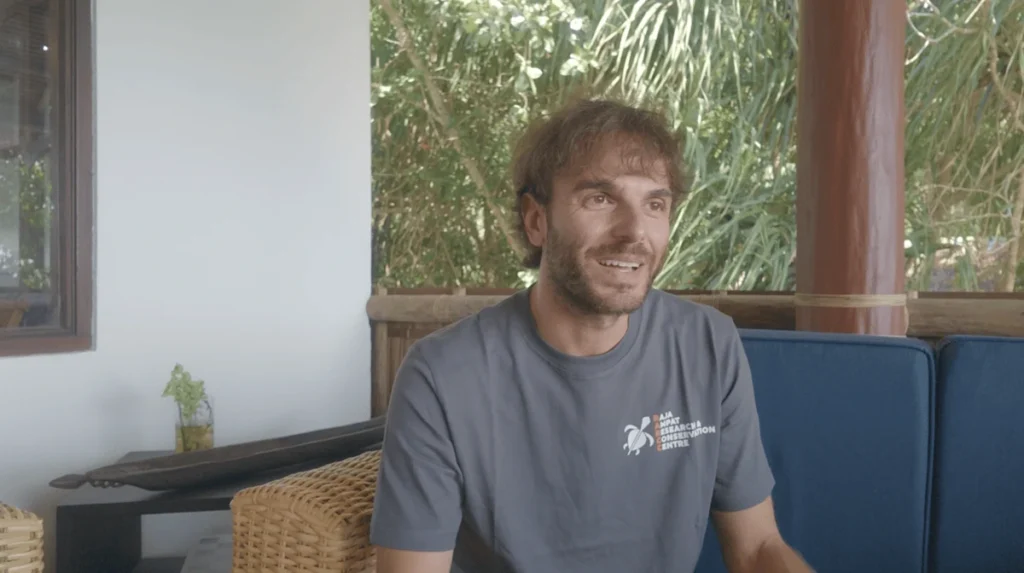
Both 2025 papers are based entirely on wild, undisturbed cuttlefish, not captive animals studied in a lab. The researchers worked the house reef around Kri Island, most often starting from the jetty at Kri Eco Resort and following the reef out from there.
They have also dived Sorido Bay Resort's Blue Hole, giving them further opportunity to observe the cuttlefish in their natural habitat. Papua Diving Resorts founder Max Ammer and the on-site team provided the logistics support that made years of repeat fieldwork possible, and Charlie Heatubun helped arrange the Indonesian research permits.
This kind of fieldwork is a direct example of what the Raja Ampat Research and Conservation Centre supports: a majority of the resorts' net profit goes toward hosting scientists, students, and researchers working in the region. The RARCC also supports other research projects and documentary production teams by providing the logistical support they need to work in the remote areas of Raja Ampat.
Why This Research Matters Beyond the Reef
The passing-stripe display has implications that reach past marine biology. The same disruptive-motion principles the researchers documented have potential applications for machine vision, including how drones might detect and avoid obstacles while navigating cluttered environments.
Santon is also interested in extending the work toward biodiversity monitoring in Raja Ampat, tracking how climate change and human activity affect these reefs over time. For guests, that means a cuttlefish sighting is not only a photo opportunity.
It is a chance to watch behavior that is now part of the published, peer-reviewed record of marine science.
Where to See Cuttlefish on a Raja Ampat Dive Trip
Broadclub cuttlefish are commonly spotted on the house reefs and surrounding dive sites around Kri Island, and individual animals often hold the same territory for extended periods. Slowing down and watching a cuttlefish for several minutes is far more likely to reveal a hunting display than swimming past.
Dive guides at Sorido Bay Resort and Kri Eco Resort can point guests toward cuttlefish known to frequent specific reef sections, improving the odds of a longer encounter. Photographers working with the Raja Ampat SEACAM Center can put that patience to particularly good use, since the passing-stripe display rewards a steady hand and a few extra minutes of observation.
The cuttlefish drifting past on a Raja Ampat dive is not just a striking photo subject. It is an active research subject helping scientists understand animal camouflage, and a stay at our resorts puts guests on the same reefs where that work is happening.
The broadclub cuttlefish (Sepia latimanus) is a large, reef-associated cephalopod found throughout the Indo-Pacific, including Raja Ampat. It is known for rapid color and pattern changes, and for hunting displays elaborate enough that researchers have only recently documented them in detail.
Broadclub cuttlefish use at least four distinct visual displays while hunting, including a passing-stripe pattern that ripples dark bands across the body as the animal approaches prey. Rather than staying still, these patterns move with the cuttlefish, which appears to disrupt how prey such as crabs and shrimp detect the predator's approach.
Broadclub cuttlefish are commonly spotted on the house reefs around Kri Island, including sites accessible from Kri Eco Resort's jetty and Sorido Bay Resort's Blue Hole. Individual cuttlefish often hold the same reef territory for extended periods, so dive guides can point guests toward animals known to frequent specific sections.
Motion camouflage is a strategy animals use to hide or disguise their movement through their movement, color, body pattern, or behavior, making it harder for other animals to notice their approach. In broadclub cuttlefish, the passing-stripe display may make it harder for prey with limited vision to notice the predator moving closer.