Isabella Tabacchi’s Underwater Photo Editing Tips from Raja Ampat
Award-winning landscape photographer Isabella Tabacchi spent two weeks at the Raja Ampat SEACAM Center in August 2026, then spent even longer at the editing screen. Here is what she learned about color correction, backscatter, and picking up a camera housing again after two years away.
October 1, 2026
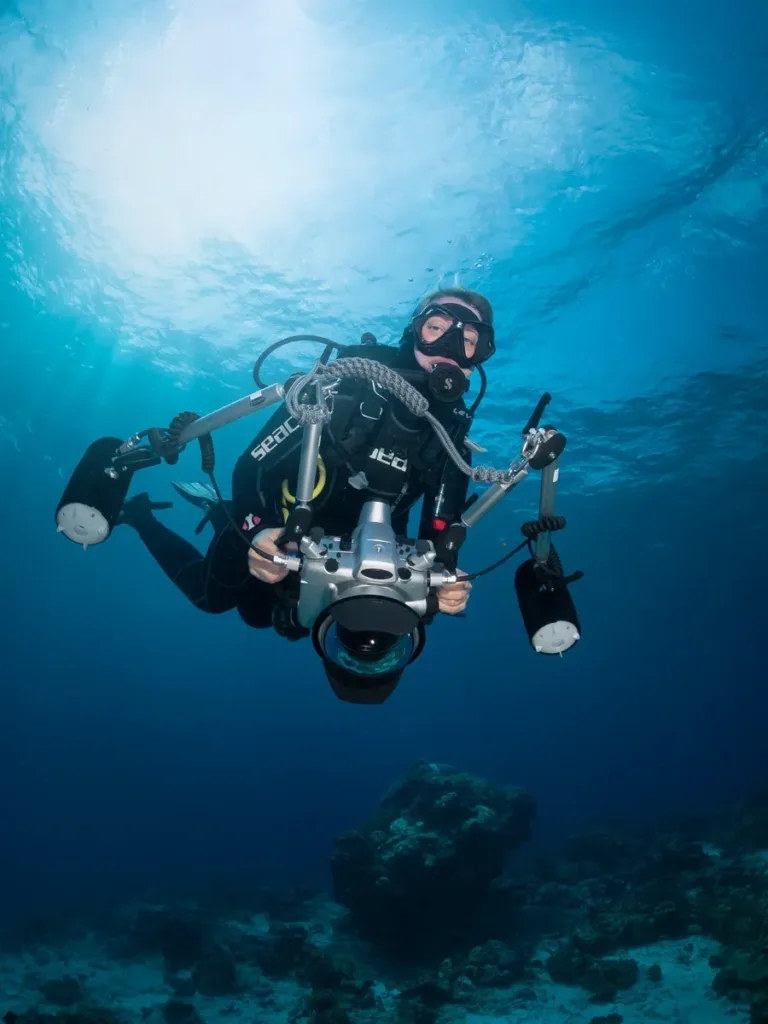
"The photos are not what people think," Isabella Tabacchi says of editing underwater images. With a background in color correction, she spent two weeks in Raja Ampat learning to shoot while editing her own images, and during the second week, she also edited images from workshop attendees.
Isabella Tabacchi, the Italian landscape photographer who joined the Raja Ampat SEACAM Center's August 2026 workshop, spends much of her time behind the screen, in addition to behind the camera. She explains why underwater images lose color with depth, why backscatter and green casts need local fixes rather than one global edit, and what it felt like to return to diving after two years away.
Before arriving, she had heard about Raja Ampat's currents from her instructors in Italy and expected them to be difficult. Once underwater, with Papua Diving Resorts' dive guides reading the conditions and positioning her at the right sites at the right moments, the currents turned out to be manageable rather than daunting.
"The memory of the muscles is incredible," she says of returning to diving after two years. Taking her camera housing underwater again worried her more than the diving itself.
"It was not as terrible as I thought," she adds.
What Backscatter Actually Looks Like Underwater
Photo taken by Don Silcock
Color correction was one of the biggest changes Isabella had to learn when moving from landscape photography to underwater photography. Unlike shooting on land, colors can look different underwater, with some hues becoming weaker as she goes deeper.
"Post-processing is... to bring out colors... to fix backscatter, the noise..." she says, explaining how editing helps restore the colors that are already in the scene. For Isabella, the goal is not to add something that was never there, but to bring out the colors and details that the water has made harder to see.
Water absorbs color at different depths, and red light is absorbed within roughly the first 10 meters, according to NOAA Ocean Exploration. Given the wariness some underwater photographers feel toward digital processing, Isabella sees her approach as a way to show the underwater world and its marine life more accurately, not less.
Why Underwater Color Correction Needs Local Adjustments, Not One Global Fix
One insight shaped her editing more than any other: the areas of a frame farthest from the strobe carry a different color cast than the subject in front of it. A single white-balance slider cannot fix the whole image at once.
"It's important to make local adjustments... to fix what we can't fix underwater," she says. She built this eye over several years editing Don Silcock's underwater images before she ever dived herself, a story told in full in the workshop feature.
The Shot She Didn't Plan For: A Mangrove Split Shot
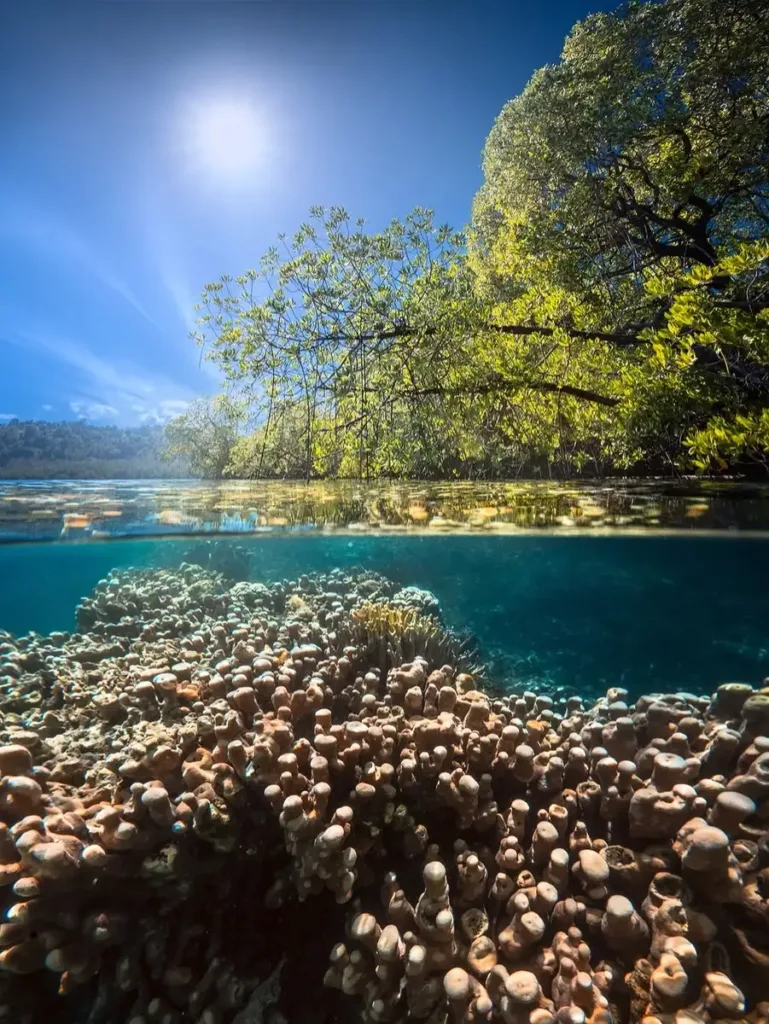
The photo was taken and uploaded by Isabella Tabacchi to her personal Instagram account
Isabella's background is landscape photography, and one image from her two weeks shows how that eye translates underwater: a half-and-half, over-and-under shot of Raja Ampat's mangroves.
"I could create a kind of vertical panorama of underwater and outside the water... I really enjoyed to discover new techniques," she says. Don Silcock has pointed to this ability, to see the finished image before she creates it, as central to her work; she calls it her "vision." Across her two weeks, she applied that same eye to wide-angle, wide-angle macro, macro, and focus-bracketed shots, editing each with the same care she gave the split shot.
Teaching the Digital Darkroom Sessions
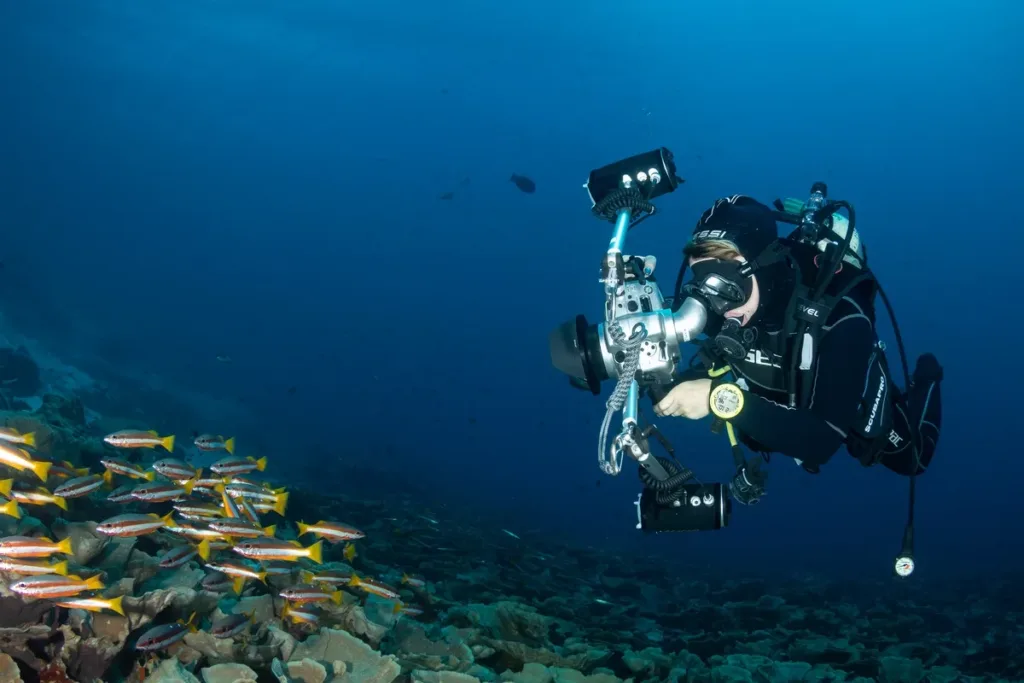
During her second week in Raja Ampat, Isabella spent her afternoons running the workshop’s digital darkroom sessions, editing attendees’ images and teaching the same color-correction and editing techniques she uses in her own work. Her first week was focused on getting back into the water, getting used to bringing her camera underwater, and building her new skills before sharing what she had learned with the workshop participants.
That combination, a morning in the water and an afternoon at the screen, is what a Raja Ampat SEACAM Center workshop is built to teach: both shooting and editing, not one or the other.
What She's Bringing Back to Raja Ampat Next Year
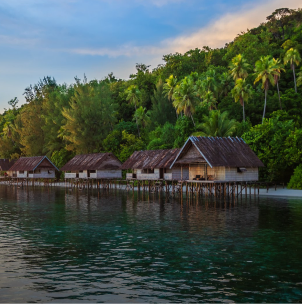
Photo taken by Papua Diving Resorts
"I felt really, really in a place full of mindfulness, and I'm very happy... to come back next year," Isabella says. She plans to keep developing both her underwater vision and her editing skills on future visits, and she is already booked to return to the Raja Ampat SEACAM Center to teach the digital darkroom sessions at next year's Advanced Workshop, running from August 8 to 14, 2027.
Ready to Start Your Own Editing Story in Raja Ampat
Isabella Tabacchi's real work in Raja Ampat happened as much at the editing screen as it did underwater, proof that a Raja Ampat SEACAM Center workshop teaches the whole process, from the dive to the final edit. See upcoming Raja Ampat SEACAM Center workshop dates, including next year's digital darkroom sessions, and book your stay at Sorido Bay Resort.
Backscatter shows up as small, bright particles lit by a strobe. Good strobe placement can help reduce it by lighting the subject instead of the particles in the water, while keeping the amount of water between the camera and subject as low as possible.
In editing, photographers can also use local spot or brush adjustments to reduce the appearance of backscatter without changing the rest of the image.
Water absorbs color unevenly with distance from the light source, so areas closer to a strobe carry a different color cast than areas farther away. A single white-balance or color slider applied to the whole image cannot correct both areas at once, which is why area-by-area, local adjustments work better underwater.
A split shot, also called an over/under, shows both the underwater scene and what is happening above the surface in a single frame, using a dome port to keep both halves of the image in focus.
Red light is the first to go, absorbed within roughly the first 10 meters of depth, according to NOAA Ocean Exploration. Orange and yellow follow at greater depths, which is why images shot deeper often need more correction to restore natural color.
Isabella Tabacchi's experience suggests so. Her years of editing underwater images gave her a trained eye for color and composition before she ever started diving, but one of the biggest challenges was learning to dive well, develop good buoyancy, and get comfortable using a camera underwater, where there are more factors to manage than when photographing above the surface.