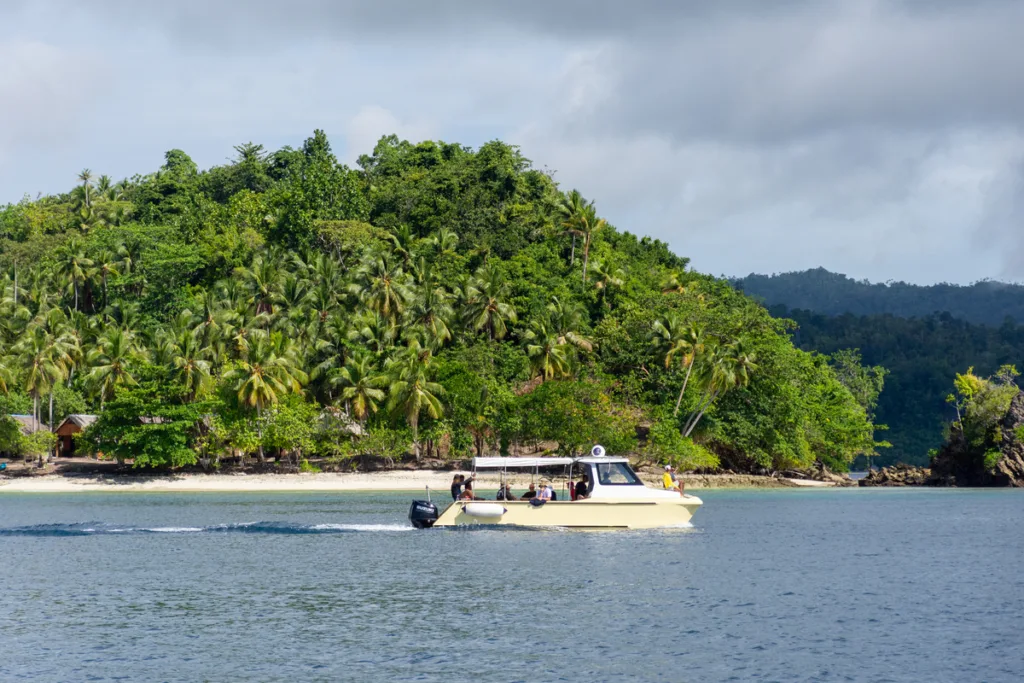
Papua Diving Resorts has added two new catamaran-style dive boats to its fleet in Raja Ampat. Each boat measures 8 meters and comfortably carries around 8 divers, with room left over for camera equipment.

Their catamaran hulls handle waves better than some of the resorts’ other boats, making longer trips to Raja Ampat’s outer dive sites more comfortable. The story behind the boats goes further than comfort.

They are the latest result of our diving resorts’ long-running approach to training, employing, and building skills within local Papuan communities, an approach that also supports the resorts’ wider conservation work.

More Comfortable Boats for Longer Raja Ampat Trips

The catamaran design cuts through waves more evenly than a standard monohull, so longer journeys feel less bumpy for divers and gear alike. That makes the new boats well suited to trips out to the Fam Islands and Mushroom Islands, both a longer run from Kri Island than the resorts’ house reef sites.

Each boat carries around 8 divers plus their camera equipment, with divers entering the water using either a back-roll or a giant stride depending on preference. For guests who already spend a good part of the day traveling to reach these more remote sites, a steadier ride makes a real difference by the time they reach the drop point.

Built by Local Papuans in Sorong

Built by Local Papuans in Sorong
Photo taken by Joe Szymankiewicz

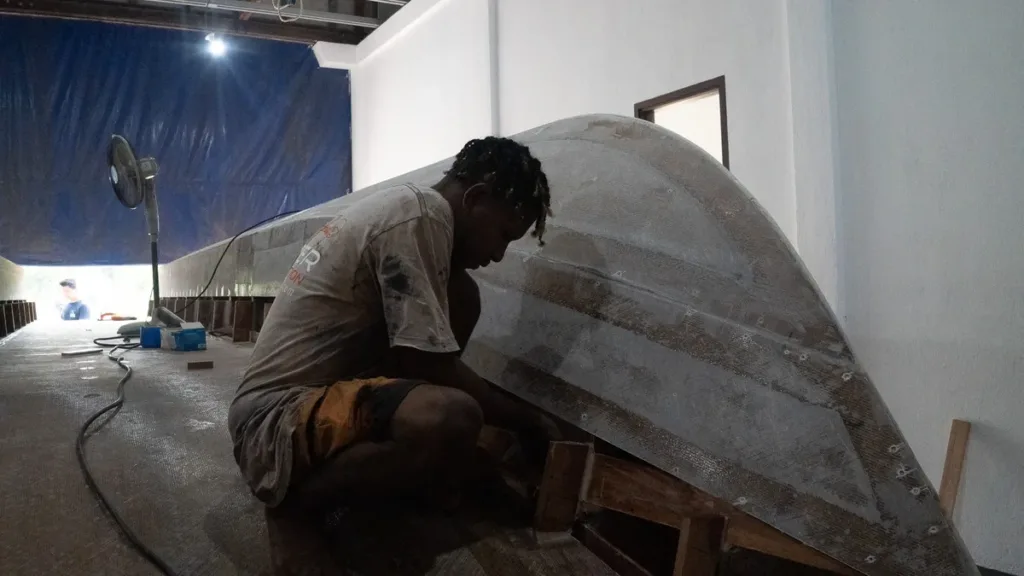
Our resorts build the dive boats at our own fiberglass workshop, now based in KEK, Sorong. The workshop used to sit at the resorts on Kri Island, but as the boatbuilding operation grew and needed more space, it moved to Sorong.

The move also made logistical sense, since Sorong is the resorts’ main base for boat operations and supplies. Local Papuans make up the team building the boats. It is a workshop of people and skills as much as it is a production line, and that focus on people is at the center of the story.
Teaching Local Boatbuilding Skills

We built some of the first fiberglass boats and kayaks used in Raja Ampat, work that also connected to the Kayak4Conservation initiative, which gives guests a fuel-free way to travel between islands while supporting local guesthouses along the route. Founder Max Ammer trained local people directly in efficient boat design, construction, and how to work with fiberglass.

These are practical, transferable skills, useful well beyond a job at Papua Diving Resorts, and training people in them has always been part of the resorts’ approach to community development.

Skills That Can Lead to New Opportunities

Skills That Can Lead to New Opportunities
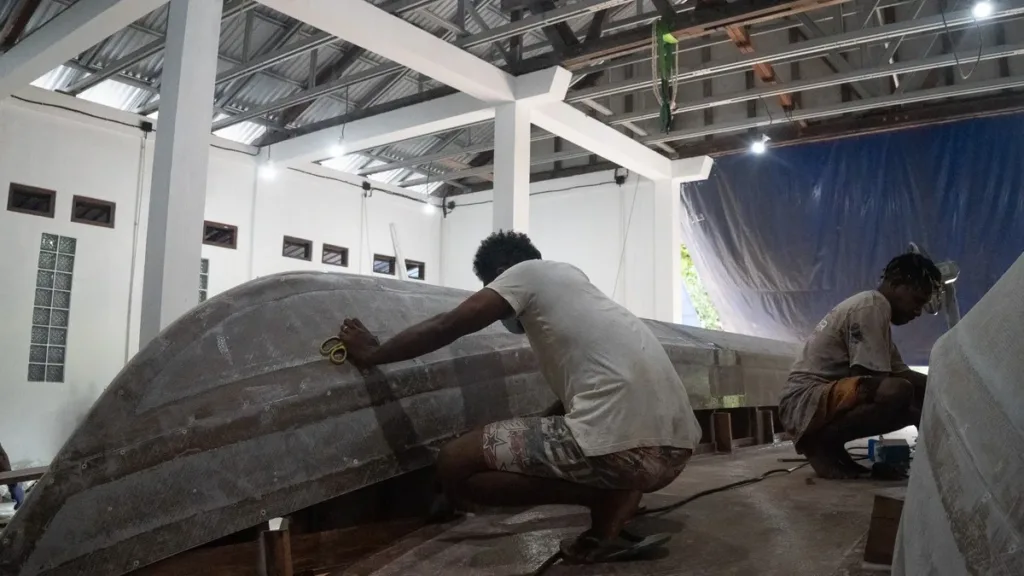
Photo taken by Joe Szymankiewicz

Some of the people who trained in the workshop have gone on to start their own boatbuilding businesses. Boatbuilding is a particularly useful skill to have in Raja Ampat, where boats are one of the main forms of transportation between islands.

It’s a modest example, not a claim about transforming the local economy. But it shows how practical, hands-on training can give local people a skill they can keep using long after their time at the resorts.
Local Training Continues on the Water

Training does not stop once a boat leaves the workshop. Our diving resorts’ boat crews and captains are trained to operate the boats and to care for and maintain the engines, so the fleet stays properly run and looked after once it’s on the water.

Between the workshop and the crew, local people are involved at every stage of a boat’s life, from construction to daily operation.

Supporting Diving, Research, and Conservation

Supporting Diving, Research, and Conservation

The new catamarans will be used for regular diving trips, longer journeys to remote sites, and trips out to the Fam Islands and Mushroom Islands. They will also support research teams that need to travel farther afield for fieldwork tied to Raja Ampat’s conservation programs.

That dual purpose, moving both divers and researchers, connects the boats to our resorts’ wider conservation mission: protecting Raja Ampat’s marine environment while investing in the training, education, and skills development of the communities who live alongside it.

More Than Just New Dive Boats

Two new boats on the water tell a bigger story. Local Papuans help build them and receive practical training in the process.

Some of those trained workers have used those same skills to build their own businesses. Local crews operate and maintain the boats once they’re in service.

The boats also help divers, underwater photographers, and research teams reach parts of Raja Ampat that are otherwise a longer haul from the resorts. With space built in for camera gear, they are a good fit for guests visiting through the Raja Ampat SEACAM Center, reinforcing our focus on supporting underwater photographers in Raja Ampat.

Diving, research, local skills, and conservation are not separate stories here. They travel on the same two boats.

Explore Raja Ampat With Papua Diving Resorts

Ready to explore Raja Ampat? Discover our diving resorts and diving experiences, including the Raja Ampat SEACAM Center, Sorido Bay Resort, and Kri Eco Resort, and start planning your trip.

Ready to book? Check rates and reserve your stay at Sorido Bay Resort or Kri Eco Resort today.

Frequently Asked Questions

How many divers can Papua Diving Resorts’ new catamaran boats accommodate?

Each new catamaran is 8 meters long and comfortably fits around 8 divers, with enough space left over for camera equipment.

Are the new catamaran boats suitable for longer trips in Raja Ampat?

Yes. Their catamaran hulls handle waves more comfortably than some of the resorts’ other boats, which makes them well suited to longer runs out to the Fam Islands and Mushroom Islands.

Can research teams use Papua Diving Resorts’ new dive boats?

Yes. Alongside regular diving trips, the boats also support research teams traveling farther afield for fieldwork connected to Raja Ampat’s conservation work.

How do Papua Diving Resorts’ boats support local communities and conservation?

The boats are built by local Papuans at the resorts’ fiberglass workshop in Sorong, where workers are trained in boat design and construction. Trained crews and captains then operate and maintain the boats, and some workshop-trained locals have gone on to start their own boatbuilding businesses.