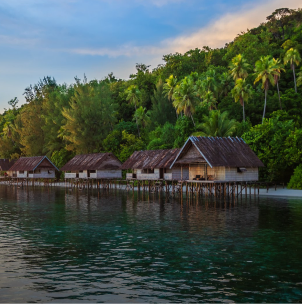
Raja Ampat is best known as one of the world's top wide-angle diving destinations, but its amazing macro life also surprises divers, with the pygmy seahorse being one of its most sought-after underwater subjects. These fingernail-sized fish live camouflaged on gorgonian sea fans and hydroids across the region's reefs, and finding one is considered a genuine highlight even among experienced divers and underwater photographers.

Raja Ampat is famous for extraordinary biodiversity, and its pygmy seahorse population is part of that story: at least four distinct types live here, each tied to a specific habitat and easy to miss without knowing exactly where to look. It is home to some of the best seahorse diving spots, where several seahorse species can be found, although their excellent camouflage makes them difficult to spot even for experienced macro divers.

1. Dampier Strait

Dampier Strait is one of the most reliable areas in Raja Ampat for spotting pygmy seahorses, especially the Bargibanti pygmy seahorse, while the Pontohi and Denise pygmy seahorses can also be found but are much more difficult to spot. Rich coral reefs and strong marine biodiversity support shallow macro habitats, giving divers consistent access to seahorses without deep diving.

2. Melissa's Garden

Melissa's Garden, near the Fam Islands, is best known for its seemingly endless Acropora coral gardens that make it a spectacular wide-angle dive site, but its rich macro life can also surprise divers with occasional pygmy seahorse sightings. Its gorgonian sea fans make it a strong location for spotting pygmy seahorses alongside other macro subjects that draw underwater photographers to the site.

3. Northern and Southern Raja Ampat

Sea fans throughout northern and southern Raja Ampat provide ideal camouflage habitat for Bargibant's and Denise's pygmy seahorses. Experienced dive guides often know the specific sea fans where seahorses regularly appear, which makes a significant difference in successful sightings.

Why Raja Ampat Is Famous for Pygmy Seahorses

Raja Ampat's reefs support the specific conditions pygmy seahorses need to thrive. Healthy coral cover, abundant gorgonian sea fans, hydroids, and seagrass meadows all provide the camouflage and food sources these tiny fish depend on.

At least four pygmy seahorse species live in the region, each favoring a different habitat, from sea fans in deeper water to shallow seagrass beds. That range, combined with consistently healthy reefs, is why Raja Ampat ranks among the best places on Earth to find them.

Types of Pygmy Seahorses Found in Raja Ampat

1. Bargibant's Pygmy Seahorse
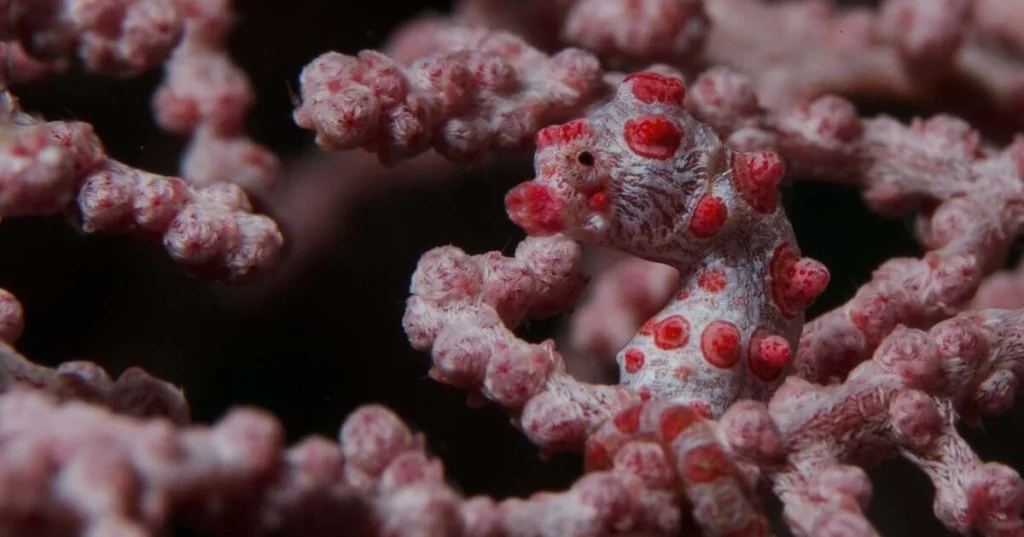
Bargibant's Pygmy Seahorse

Bargibant's pygmy seahorse lives exclusively on Muricella gorgonian sea fans, growing to under three centimeters. It typically appears in red or yellow to match the color of its host fan, making it one of the best camouflaged species in Raja Ampat.
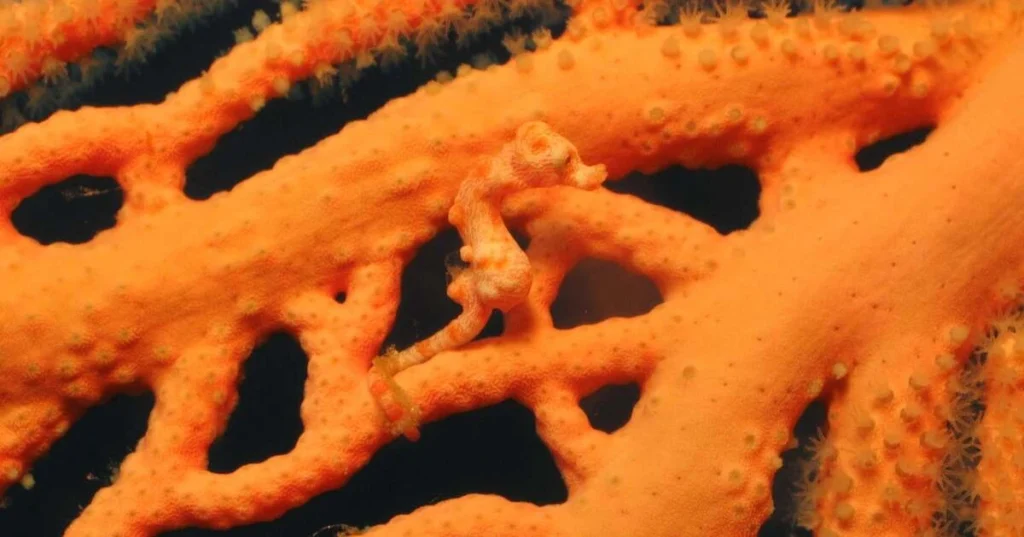
 

2. Denise's Pygmy Seahorse

Denise's Pygmy Seahorse

Denise's pygmy seahorse is smaller and more slender than Bargibant's, with a longer snout, and is easier to spot once a trained guide points one out. It lives across a wider range of sea fan colors and textures, appearing in pinks, reds, yellows, and white.


3. Santa Claus Pygmy Seahorse

The Santa Claus pygmy seahorse is a rare, brightly colored form of Denise's pygmy seahorse, marked by vivid red skin and white polyps. Its striking, holiday-toned appearance makes it one of the most sought-after subjects for underwater photographers visiting Raja Ampat.
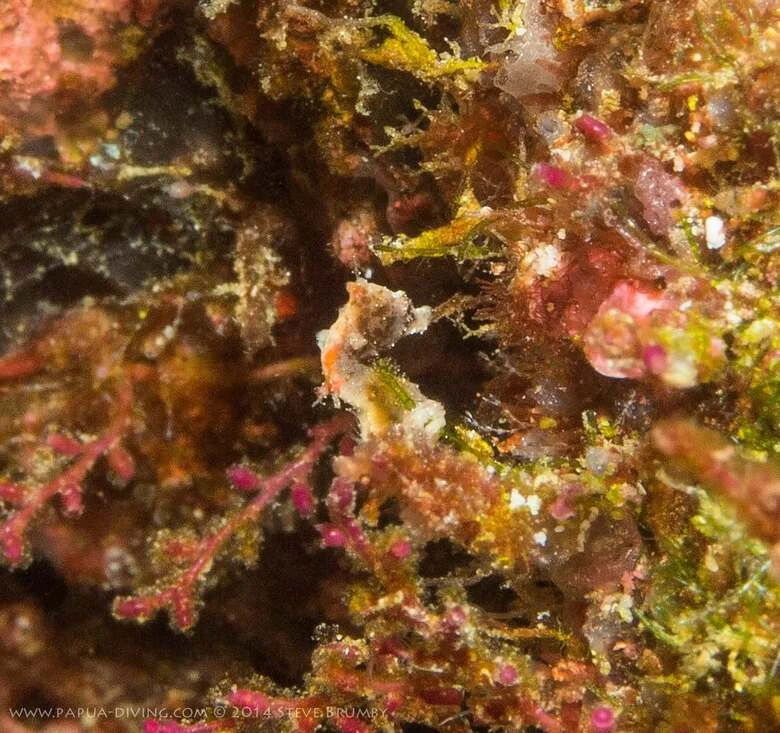
 

4. Pontohi Pygmy Seahorse

Pontohi Pygmy Seahorse

The Pontohi pygmy seahorse lives freely in shallow seagrass and hydroids rather than on gorgonian fans. It is frequently seen in pairs in Dampier Strait, making it one of the more approachable species to photograph once located.

Why Pygmy Seahorses Are Difficult to Spot

Most pygmy seahorses measure under three centimeters, and their skin texture and color match their host coral or sea fan almost perfectly. Without knowing exactly which fan or patch of seagrass to check, divers can swim past one from within less than a meter.

Papua Diving Resorts' experienced dive guides know the local reefs and macro habitats exceptionally well, helping guests maximize their chances of spotting rare pygmy seahorses in Raja Ampat.

Tips for Seeing Pygmy Seahorses Underwater in Indonesia

A few habits improve the odds of a successful sighting and help protect the reef in the process:

  • Dive with experienced local guides who know specific sea fans and habitats.
  • Use macro photography settings and approach slowly once the subject is located.
  • Move slowly and maintain steady buoyancy to avoid disturbing the reef.
  • Avoid touching sea fans or coral, since pygmy seahorses are easily stressed.
  • Bring a dive light to pick out color and detail in shaded areas.

Responsible diving helps protect the sea fans and seagrass beds that seahorses depend on, so maintain good buoyancy control and remember that seahorses are very sensitive to light, using strobes and flashlights carefully when photographing them.

Best Time to Dive for Pygmy Seahorses in Raja Ampat

Pygmy seahorses can be found in Raja Ampat throughout the year, since they do not follow a migratory season the way larger pelagic species do. Visibility and current strength shift somewhat by season, but macro diving conditions remain excellent year-round.

Experience Raja Ampat Macro Diving with Our Diving Resorts

We give macro divers and underwater photographers direct access to Raja Ampat's best pygmy seahorse habitat, with guides who know exactly where to look on any given reef. Guests staying at Sorido Bay Resort or Kri Eco Resort can reach Dampier Strait and other productive sites within a short boat ride.

The Raja Ampat SEACAM Center and SEACAM Workshops support photographers working with macro subjects, offering equipment and guidance suited to capturing pygmy seahorses and other small reef life in detail.

Start Planning Your Pygmy Seahorse Dive

Raja Ampat's healthy sea fans, shallow seagrass beds, and four distinct pygmy seahorse species make it a rewarding destination for macro diving, with exciting opportunities to spot these well-camouflaged creatures. Finding one takes patience and local knowledge more than luck, which is where an experienced guide makes the difference.

Explore dive packages, book a stay at Sorido Bay Resort or Kri Eco Resort, or contact us to join a SEACAM Workshop and start planning a macro diving trip built around Raja Ampat's pygmy seahorses.

Frequently Asked Questions

Where Are the Best Places to See Pygmy Seahorses in Raja Ampat?

Dampier Strait, Melissa's Garden near the Fam Islands, and sea fan reefs throughout northern and southern Raja Ampat are the most reliable spots. Each location favors a different pygmy seahorse species, so guides typically choose a site based on which type guests want to see.

What Types of Pygmy Seahorses Can You Find in Raja Ampat?

Raja Ampat is home to at least four types: Bargibant's, Denise's (including the Santa Claus color form), and Pontohi pygmy seahorses. Each favors a different habitat, from gorgonian sea fans to shallow seagrass and hydroids.

Do I Need an Experienced Dive Guide to Spot Pygmy Seahorses?

Yes, in most cases. Pygmy seahorses measure under three centimeters and camouflage almost perfectly with their host coral, so divers without local guidance often miss them even while diving in the same spot.

When Is the Best Time to Dive for Pygmy Seahorses in Raja Ampat?

Pygmy seahorses are present in Raja Ampat throughout the year, so there is no strict season for sightings. Conditions for macro diving remain strong across the year, though visibility can vary slightly by season.