Papua Diving Resorts is training the next generation of local Papuan dive guides to share their knowledge of Raja Ampat’s waters with visitors. Discover how the program develops diving skills, local expertise, and new opportunities for women in the region.
September 8, 2026
Max Ammer came to Raja Ampat over 30 years ago in the hope of finding WWII-era plane wrecks. He thought his journey would take him through the thick jungles of Papua, but he soon discovered that most of the wrecks were underwater.
So, with a boat and a tank, he dove around the Dampier Strait, eventually discovering and diving over 300 wrecks in the larger Papua area. In those early days, Max relied on the local Papuans who knew the waters, currents and tides like the back of their hands.
They guided him through the many reefs and channels of the Dampier Strait, as he relied on their expert local knowledge of the waters and also their stories of seeing planes crash long ago. Today at Papua Diving Resorts, we continue to rely on local Papuan knowledge of Raja Ampat's waters as they expertly and safely guide our guests through the richest reefs in the world.
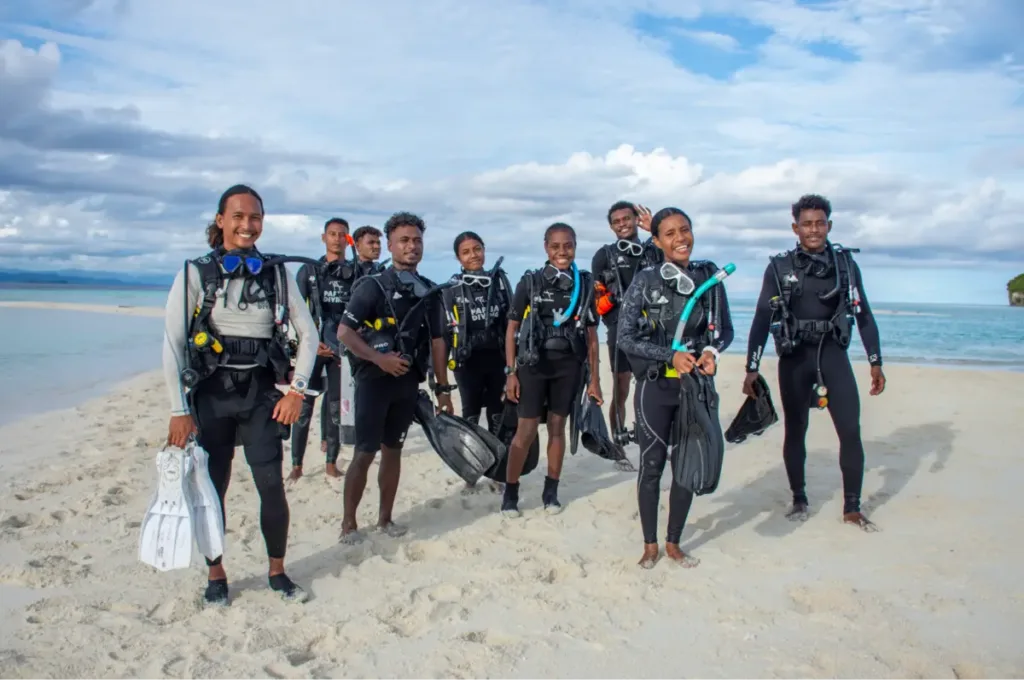
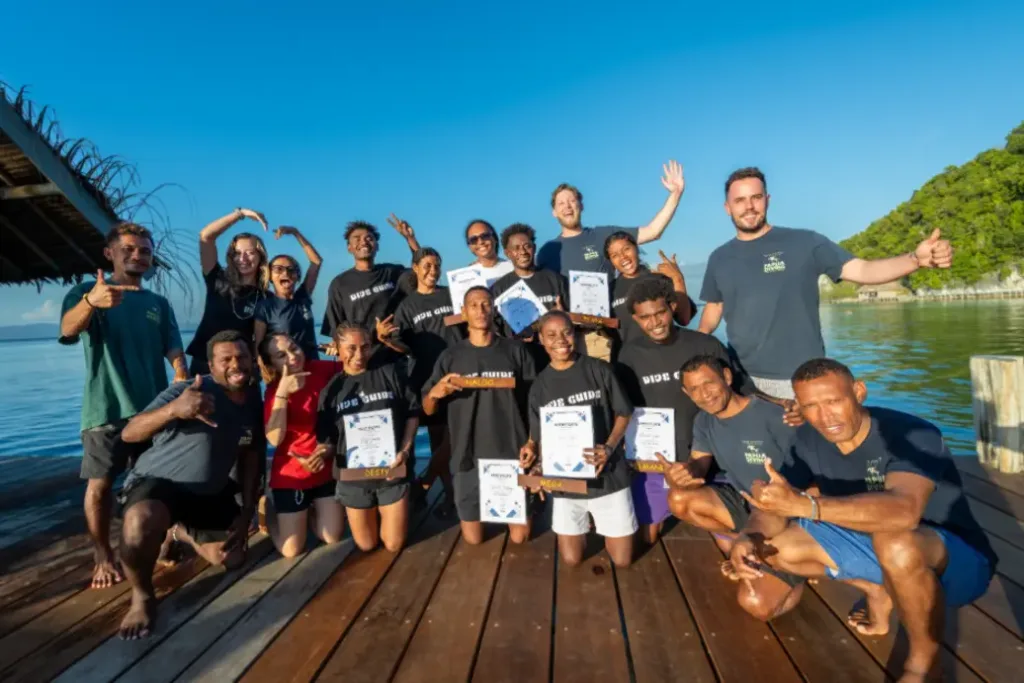
Max trained the local Papuans to be the first dive guides in Raja Ampat, and that training program continues today, over 30 years later. Over the past few months, our team has been training 8 young Papuans, both male and female, to be the next generation of dive guides.
Finding the Next Generation of Local Divers
Image by Indopacific Films
As our resorts continue to grow, our team must grow with it. Just like his earlier exploration days, Max and his team traveled to the remote areas of Raja Ampat, close to Wayag, to find locals interested in becoming dive guides.
These villages are located far from the center of tourism in the region, offering less career opportunities beyond their island. With enthusiasm, two young locals from these remote villages and six people from our existing staff (across waitressing, construction and boat crew), rose to the challenge.
Our group of eight dive guide trainees embarked on an unforgettable journey to becoming divers.
Learning to Dive and Understanding the Waters
Image by Don Silcock
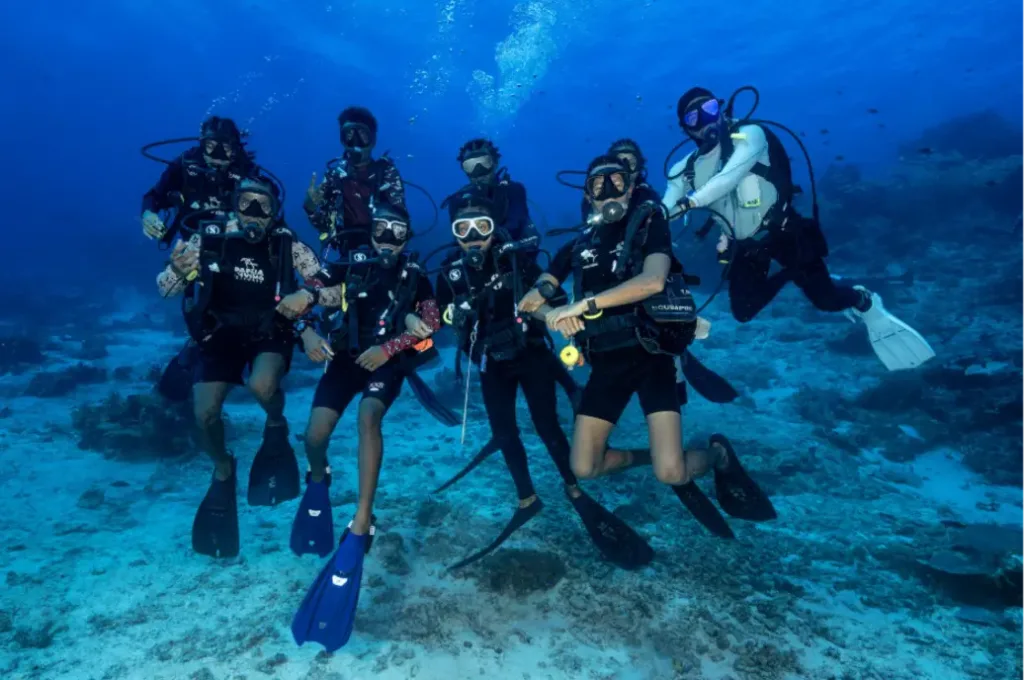
Over a course of three months, they learned how to assemble their scuba gear and maintain it, respond to emergency situations, identify marine life, understand and recognize the changing currents and tides in each dive site, and how to create an enjoyable experience underwater for our guests; earning them their Open Water certifications all the way through to Rescue Diver. And for our two trainees from West Waigeo, Mina and Tiara, they are the first in their villages to breathe underwater as divers and dive guides.
The training didn’t come easy. They struggled to breathe through the regulator, stay calm when they had to take their masks off, and properly deploy their SMBs.
Although they understood the currents and winds from above, they had to learn what that means underwater. They experienced the Dampier Strait’s raging currents, learning how to navigate them underwater, and identifying when and where it’s best to jump at each dive site.
But soon, they mastered each skill, blowing bubble rings during their safety stop.
More Women Underwater
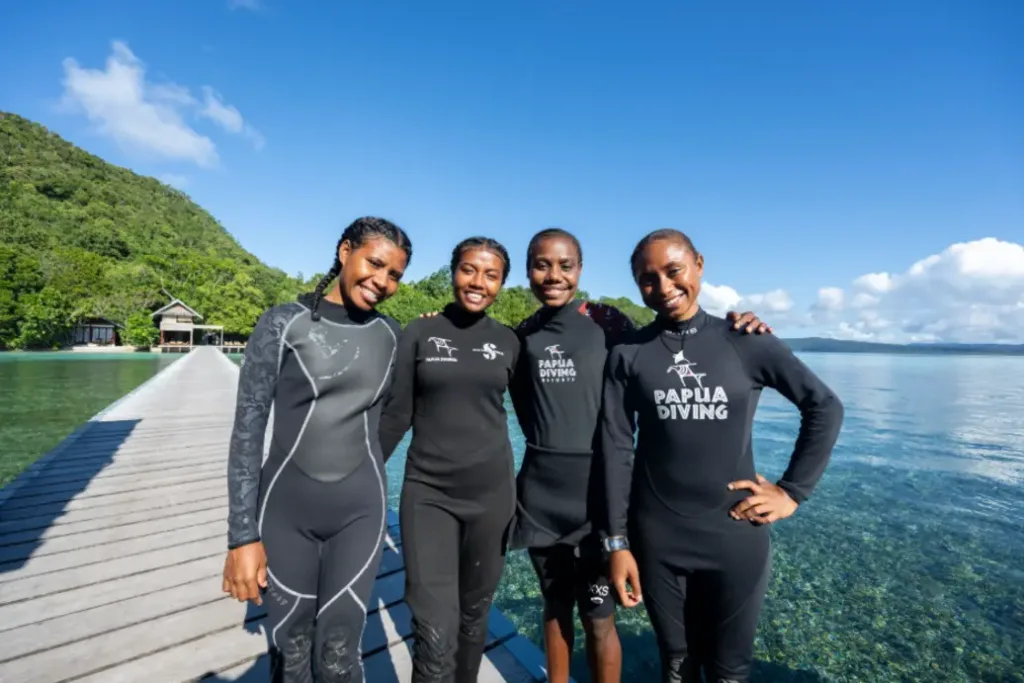
From left to right: Mina, Tiara, Mega, and Desti
Our group of eight trainees is also made up of four young women, who would have had a completely different life if they didn’t take the chance to join the training program and become dive guides. In a male-dominated industry, we wanted to see more women, especially the local women, take charge of their home, explore how beautiful it is, and be able to share it with others.
We believe this is just the beginning of more local women dive guides leading the path to more underwater exploration in the region. Hear their stories here.
From Trainees to Junior Dive Guides
Our trainees have officially graduated to Junior Dive Guides, and we can’t wait to see all the ways they will continue to grow. It has been a long three months, but this is just the beginning as they explore our dive sites, experience the currents, and discover more wildlife in the diverse habitats of the region.
Other operators in Raja Ampat opt to hire foreigners. But we know we would not be here if it weren’t for the locals’ expertise and knowledge.
Our experience as a PADI 5-Star dive resort doesn’t just come from our 30 years of operation, but from our staff who understand the way the tides and currents work here. We understand where and when to dive, offering our guests the best experience possible.
Papua Diving Resorts provides local Papuans with structured training to become professional dive guides. Trainees progress through PADI certifications, starting with Open Water and continuing through Advanced and Rescue Diver training.
They also learn about marine life, reef ecology, currents, tides, safety procedures, and how to guide guests in Raja Ampat’s unique diving conditions. Conservation, first aid, hospitality, and communication skills are also part of the training.
After completing their courses, trainees gain practical experience by working alongside experienced guides before taking on guiding responsibilities themselves
The training program typically takes around six months, depending on each trainee’s experience and progress. During this time, they build their diving skills, complete the required certifications, learn about Raja Ampat’s waters and marine life, and gain practical experience guiding guests.
The goal is to ensure that new guides are confident, capable, and ready to provide safe and enjoyable diving experiences.
Local knowledge is especially valuable in Raja Ampat, where currents and tides can change between dive sites. Local Papuan guides understand the waters, weather, currents, and marine life from years of experience.
This knowledge helps them choose the right dive conditions, navigate safely, and help guests discover the region’s diverse underwater life.
Our diving resorts are creating opportunities for more local women to enter the diving industry. By including women in its dive guide training programs, the resort helps them develop professional diving skills and build careers while sharing their knowledge of Raja Ampat.
The aim is to encourage more local women to become confident dive guides and take part in protecting and showcasing their home waters.