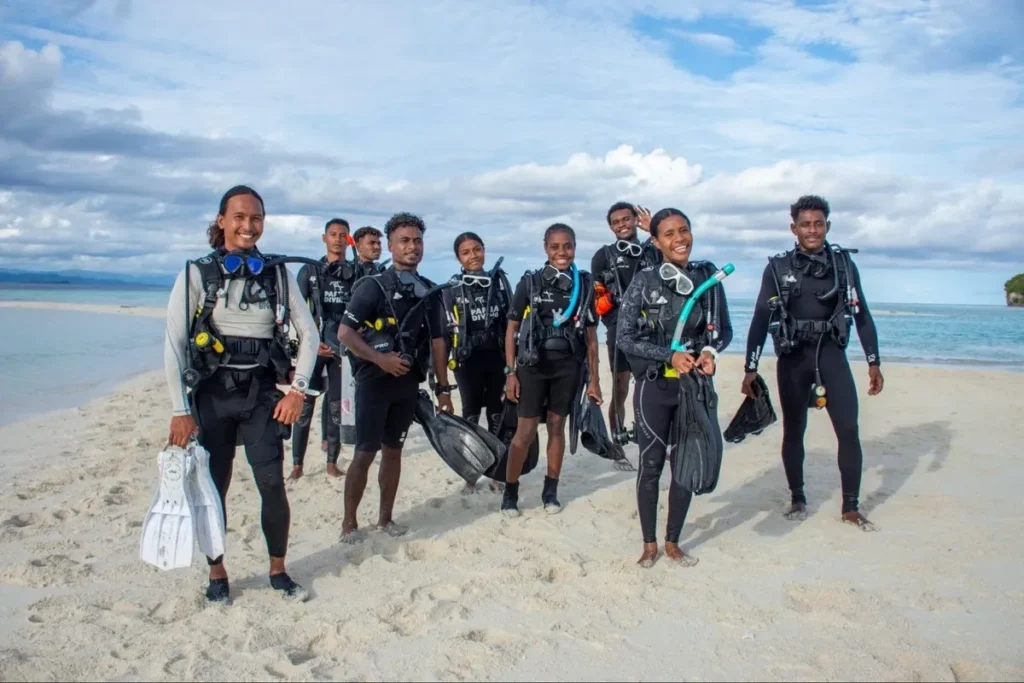
In Raja Ampat, the difference between a good dive and a world-class one often comes down to one person: the guide who knows when the currents will turn, where the sweetlips gather, and how to help you make the most of every dive. That knowledge is why the local Papuan dive guides of Raja Ampat set Papua Diving Resorts apart.

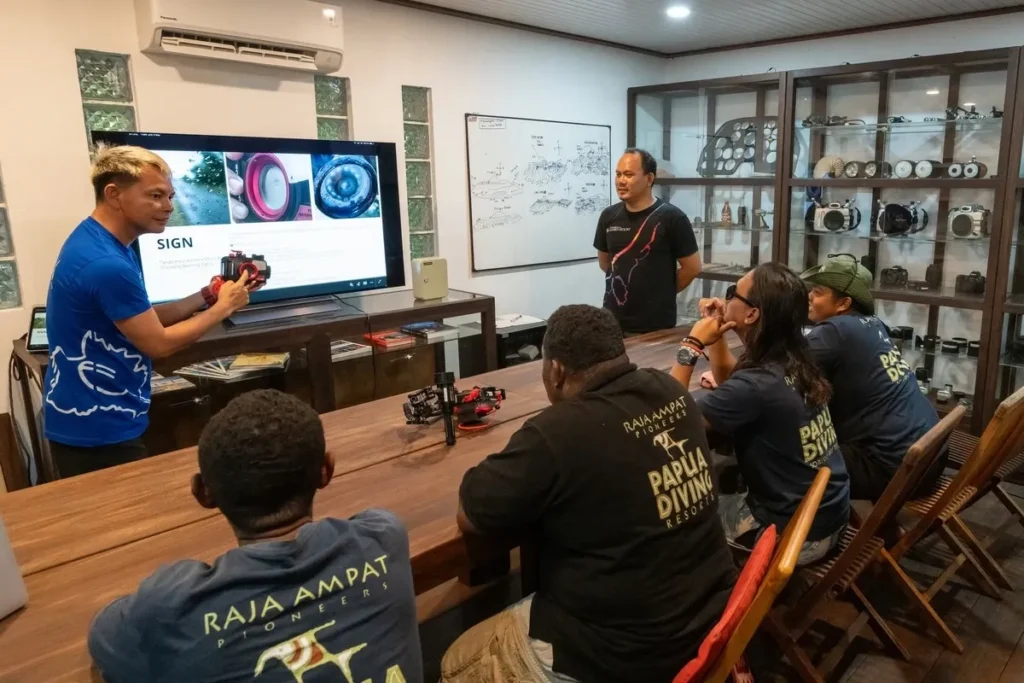
Our diving resorts build a predominantly Papuan dive team by training local talent in-house, from Open Water Diver through Divemaster, then further as photo guides for the Raja Ampat SEACAM Center. Guides receive this extra training to assist photographers, whether they join a SEACAM workshop or visit independently with their own gear.

This local-first approach pairs generations of local reef and tidal knowledge with professional dive guide training in Raja Ampat.

What Makes a Great Dive Guide in Raja Ampat

A great dive guide in Raja Ampat turns decades of local knowledge into a safer, better-timed dive, reading tides and currents as closely as the reef itself. Raja Ampat sits at the center of the Coral Triangle, home to 75% of the world's known coral species and more than 1,600 reef fish species, complexity that rewards guides who know a site's rhythms.

Strong-current sites often call for a reef hook, and Cape Kri, right on the resorts' doorstep, is famous for its incredible marine life. Dr. Gerald Allen recorded a world record of 374 fish species on a single dive at Cape Kri in April 2012.

If you prefer a more relaxed dive, our team knows how to time the currents and choose dive sites that match your comfort level. You can also experience the colorful reefscapes of Cape Kri when the current is less strong, giving you the chance to enjoy this remarkable dive site at a more comfortable pace.

Local Papuan Guides, Trained from the Ground Up

Local Papuan Guides Trained from the Ground Up

Our resorts train its guides from the ground up, employing a predominantly Papuan team and building skills from first certification through years of reef experience. Around 90% of staff across the resorts are Papuan.

Guides complete the same divemaster training in Raja Ampat that Max Ammer began when he founded the region's first dive resort in 1993, progressing from Open Water Diver through Divemaster. A new group of trainees has recently been scouted from island villages near Wayag, continuing a model that creates meaningful opportunities for local people to build skills, pursue careers in diving, and access a more stable monthly income.

By supporting local employment and training, the program offers an alternative to destructive practices like shark finning and dynamite fishing while recognizing the knowledge, skills, and potential already present in these communities.
Local Knowledge Above and Below the Water

Local knowledge above and below the water is what separates our local dive guides in Raja Ampat from operators who fly in foreign staff for the season. Papuan guides grow up reading the water, and the resort adds professional scuba training on top of generations of insight into local tides and currents, letting guides time dives to conditions and find wildlife that appears only in specific windows, like gatherings of sweetlips.

That knowledge cannot be imported or rotated in.

Guides Trained for Underwater Photographers

Guides Trained for Underwater Photographers

Guides trained for underwater photographers understand exactly what a shooter needs from a dive, not just where to find marine life. As the Raja Ampat SEACAM Center grows, guides train as photo guides who factor in current, light, and subject behavior to position photographers for macro or wide-angle work, then get them to the right site at the right tide.

It's why the resorts host workshops with photographers like Alex Mustard, and why the SEACAM Center, the world's first dedicated SEACAM facility, draws shooters of every level and camera brand.

How to Dive with Papua Diving Resorts

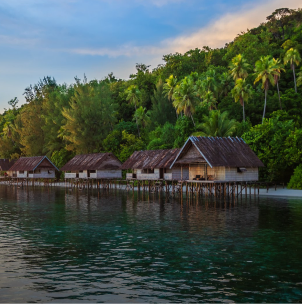
Diving with our diving resorts starts with a choice of two PADI Five Star Dive Resorts, both built around direct house reef access and decades of local guiding experience. Sorido Bay Resort and Kri Eco Resort both put guided diving steps from your room.

Newer divers can train through PADI courses, while experienced divers and photographers can build a stay around signature sites like Cape Kri, Blue Magic, and Sardine Reef, or plan a trip around the SEACAM Center for hands-on photo support. Not sure which resort fits your trip?

Contact us and our team will help you choose, or go ahead and book your dive trip directly through the website. In Raja Ampat, the reefs are the draw, but it is the local, expertly trained dive guides of our resorts who turn a dive trip into the kind of experience divers and photographers come back for.

Plan your Raja Ampat dive trip with a local guide team who knows these reefs by heart. Check availability at Sorido Bay Resort and Kri Eco Resort today.

Frequently Asked Questions

Do You Need a Dive Guide in Raja Ampat?

Yes. Raja Ampat's currents shift quickly across a wide, remote archipelago, so a local guide who knows each site's timing keeps diving safer.

Guided diving is standard at PADI Five Star Dive Resorts like Sorido Bay Resort and Kri Eco Resort.

Are the Dive Guides in Raja Ampat Local?

Most of our dive guides are Papuan, trained in-house from Open Water Diver through Divemaster. This local-first approach brings generations of reef, tide, and current knowledge that a classroom alone cannot teach.

What Is the Best Time for Underwater Photography in Raja Ampat?

It depends on the subject, since light, tides, and currents change throughout the day and across the seasons. A trained photo guide helps time dives to these windows, whether the goal is macro subjects or wide-angle shots.

What Is Cape Kri Known For?

Cape Kri, a Dampier Strait dive site, holds the world record for the most fish species logged on a single dive: 374, recorded by Dr. Gerald Allen in April 2012, and remains one of Raja Ampat's most consistently biodiverse sites.

What Is the Raja Ampat SEACAM Center?

The Raja Ampat SEACAM Center, located at Sorido Bay Resort, is the world's first dedicated SEACAM facility, supporting underwater photographers of every level and camera brand through equipment access, workshops, and trained photo guides.