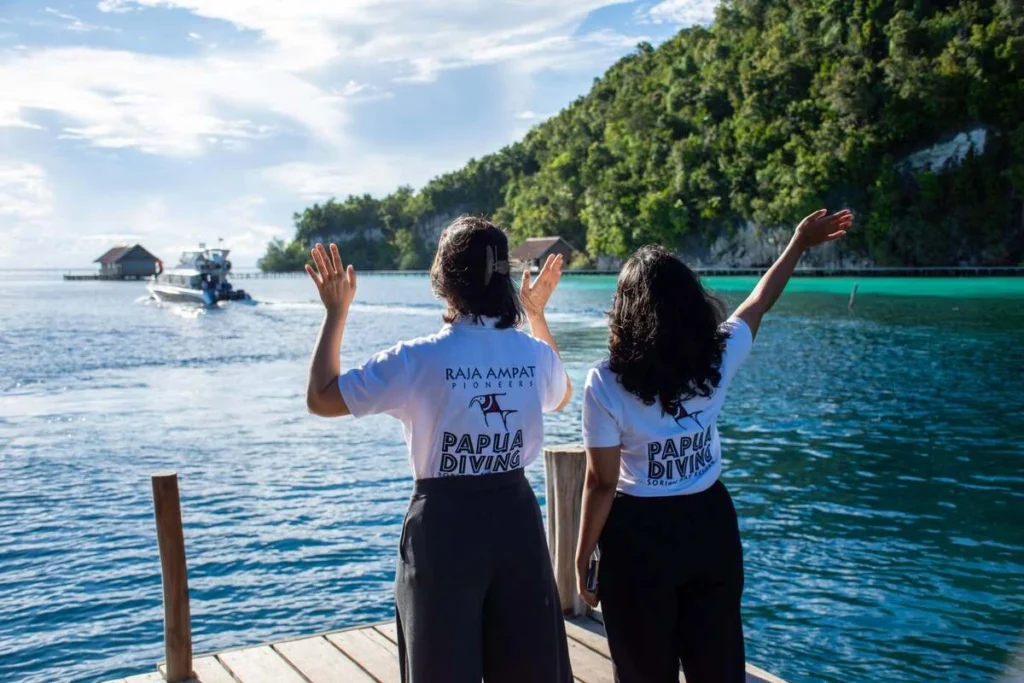
There is a moment, just before you first descend, when the question you have been carrying for months grows quiet. Liveaboard or resort.

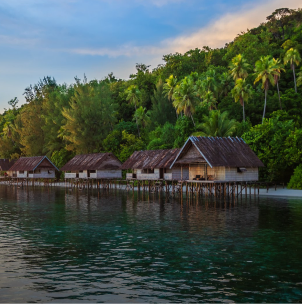
The reef is already there. A Raja Ampat dive resort gives you a fixed island base, unhurried days, and the kind of reef knowledge and conservation commitment that only decades on-site can build.

A liveaboard covers more geography in a single trip, typically spanning the Dampier Strait to Misool, though standards of local expertise and environmental practice vary widely from boat to boat. If you are traveling with a non-diving companion, focusing on underwater photography, or want guides who know these reefs by name and a resort built around protecting them, a land-based dive resort in Raja Ampat is the stronger choice.

Two Ways to Dive the World's Most Biodiverse Waters

Raja Ampat holds 574 coral species, representing 75% of all known hard coral species, confirmed by Conservation International's Rapid Ecological Assessment, and more than 1,600 fish species have been recorded across the archipelago. Both options give access to the same extraordinary ecosystem; the difference is in how you move through it.

A liveaboard takes you across the archipelago:

A land-based resort keeps you on one island and lets you explore a specific reef system in greater depth, with the flexibility to revisit favorite sites as lighting, tides, and currents transform the same reef from one dive to the next. There is no single best way to dive Raja Ampat, only the way that fits how you want to spend your days underwater and who you want to spend them with.

One offers breadth. The other offers depth, continuity, and a resort invested in protecting the reef long after your trip ends.

Dive Site Access: Range vs Depth of Knowledge

Dive Site Access: Range vs Depth of Knowledge

A liveaboard covers more of the archipelago in a single trip, running three to four dives a day across multiple island groups. Misool, a multi-hour sail south of Kri Island, is accessible only by vessel on most itineraries, which is the main practical reason some divers choose a liveaboard over a resort stay.

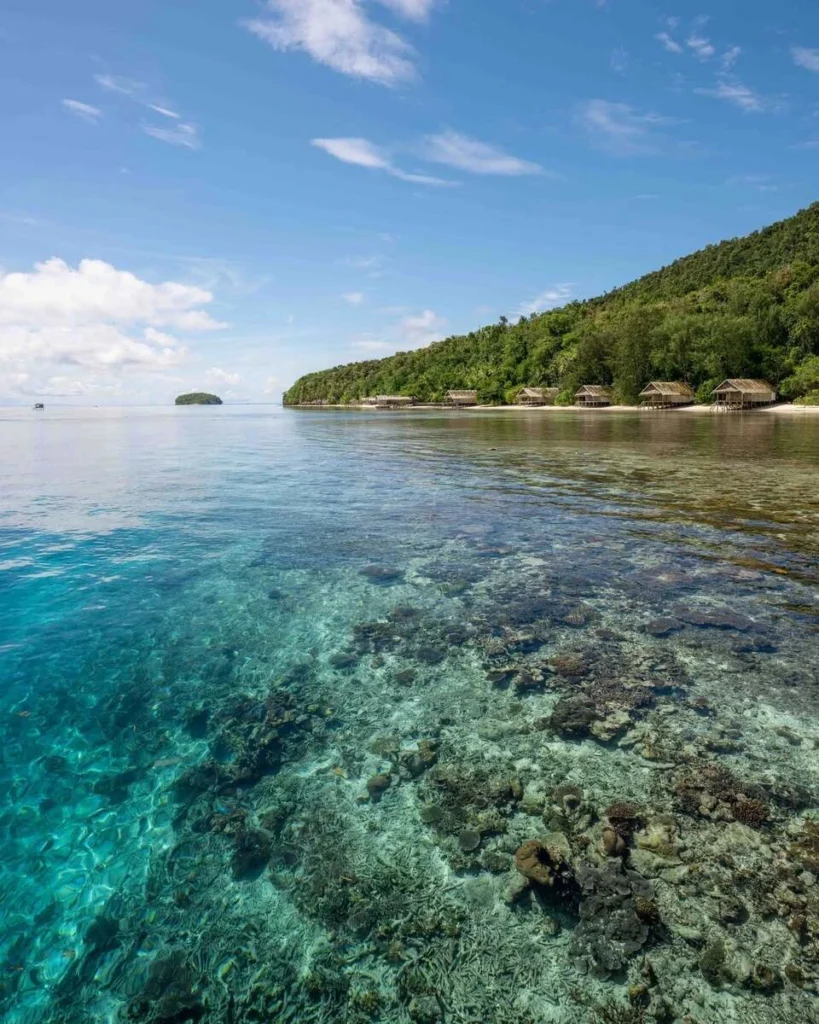
Raja Ampat resort diving looks different, and for most divers, better. Based in the heart of the Dampier Strait around Kri Island, Papua Diving Resorts gives you access to one of Raja Ampat's highest concentrations of dive sites, enough for a full week of diving without repeating a site.

Our guides have been diving Cape Kri, Sardine Reef, Blue Magic, and other local sites for more than 30 years, the same experienced team trusted to guide production crews for BBC Earth's Blue Planet and Planet Earth, and the 2025 documentary Ocean with David Attenborough. That depth of local knowledge, built over decades in one place, is something a liveaboard passing through for a night or two simply cannot offer.
Daily Dive Rhythm

A liveaboard runs on a structured, intensive schedule:

  • Three to four dives a day
  • Scheduled briefings
  • Overnight passages to the next site

It maximizes time underwater, but leaves little room to slow down or change plans. A land-based resort works differently.

Enjoy up to four guided dives a day with our PADI Five Star Dive Center, plus unlimited access to the house reef from the jetty, whether that's an early morning dive, a reef check at dusk, or skipping an afternoon dive for kayaking or birdwatching instead. Every diving plan is customized to your interests and experience level, so the pace is based on what you enjoy, not a fixed schedule set by a vessel timetable.

Learn more about life at a land-based dive resort in Raja Ampat.

Life Above the Water

Life Above the Water in Raja Ampat

On a liveaboard, life above the water means deck time between dives, meals shared with other divers, and overnight sailing between anchorages. The experience is immersive and dive-focused, with shore access limited to brief excursions.

A land-based resort looks different above the surface: birdwatching for the Red Bird of Paradise, island excursions in Raja Ampat across Kri and neighboring islands, sea kayaking through limestone karst, and spa and wellness at Sorido Bay Resort. For non-diving companions, this is not an alternative program. It is an experience.

Two resorts, two experiences: Sorido Bay Resort offers refined comfort and the Raja Ampat SEACAM Center; Kri Eco Resort offers immersive simplicity close to the reef. Both are on Kri Island.
Underwater Photography

A liveaboard suits wide-angle and pelagic work:

Moving between sites creates subject diversity, though shared camera tables and limited charging infrastructure are practical constraints for larger rigs. The Raja Ampat SEACAM Center at Sorido Bay Resort is the world's first SEACAM Center and the only underwater photography facility of its kind in the region, with professional SEACAM Ambassadors leading workshops.

Stable charging setups, dedicated camera workstations, and the ability to return to the same macro site across multiple dives give serious photographers a clear advantage over any liveaboard schedule. Returning to the same site several times during a stay can make the difference between a quick sighting of a pygmy seahorse and capturing the perfect portfolio image.

If you'd like to try underwater photography or bring home a visual souvenir of your dive, guests can also rent camera gear, from action cameras to DSLRs. With more than 30 years of local experience, our guides know the tides, currents, and best times to visit each site, so photographers can return as often as needed to get the shot they want.

Guests who join our workshops also receive expert guidance to make the most of every dive.

Conservation and Connection

Conservation and Connection

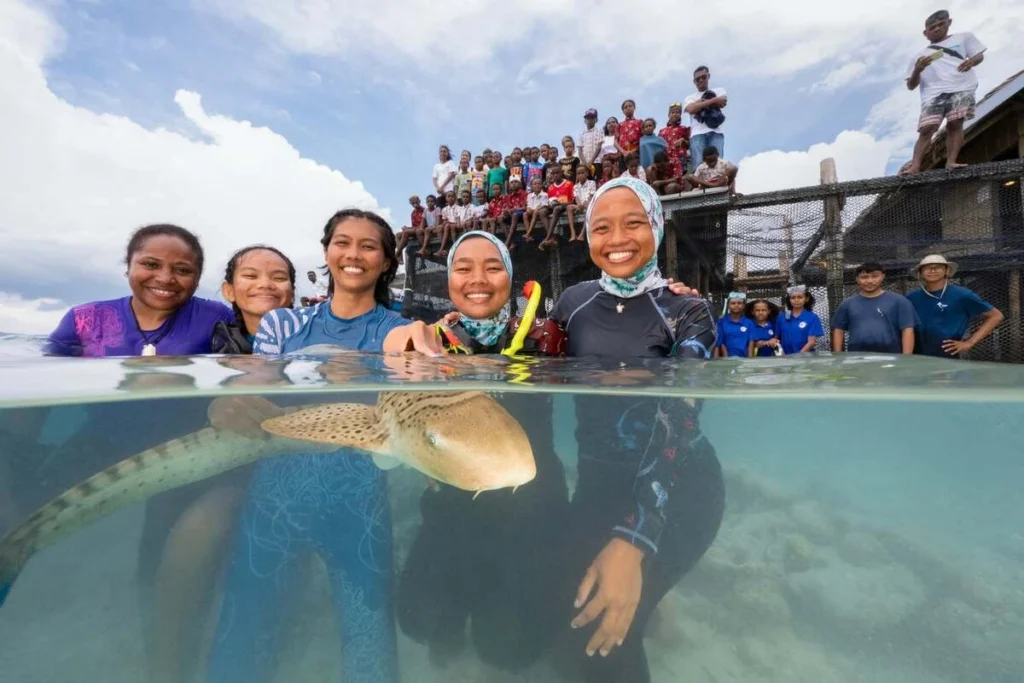
This is where the two experiences differ most. Every stay at our diving resorts directly funds RARCC, the Raja Ampat Research and Conservation Centre, which runs the only zebra shark hatchery of its kind on-site, raising young sharks and releasing them back into the wild to restore Indo-Pacific leopard shark populations.

Our resort is Green Fins certified and proudly operates as both a PADI Five Star Dive Center and a PADI Eco Center, reflecting our commitment to responsible diving and marine conservation. Beyond the ocean, we also support terrestrial conservation through the Stewards for Nature agroforestry project in Kebar, which helps restore damaged grasslands through reforestation efforts.

Wastewater management is a good example of why this matters. Sewage and greywater regulation for boats and coastal properties in Indonesia is loosely enforced outside major tourism hubs, and it is difficult for a guest to verify what happens to a vessel's waste once it is out of port.

We treat wastewater on land through a dedicated wastewater garden system, a fixed, inspectable setup that filters water naturally before it re-enters the environment, rather than a shipboard system a guest has no way to see. Liveaboard conservation credentials vary significantly by operator, and standards that apply on land, like a resort's certifications and its wastewater treatment, are harder to verify or enforce at sea.

At Papua Diving Resorts, the shark hatchery is steps from the guest jetty, the wastewater garden is part of the property, and the guides who brief you each morning are the same people who monitor the reef. Staying here is a choice to be part of the reef's future, not just a place to sleep between dives.

Cost and Planning Considerations

Liveaboard pricing is typically all-inclusive, covering accommodation, meals, guided dives, and Sorong transfers in a single package price, though national park entry fees, harbor fees, and crew gratuities are generally additional. Land-based resort pricing tends to be more flexible: meals and guided dives are usually included, while PADI courses, photography workshops, and excursions are add-ons, and longer stays can often be arranged at adjusted rates.

Both options require reaching Sorong as the gateway, and resort transfers are straightforward. Seasickness is a genuine consideration on longer liveaboard passages between island groups; it is not a factor at a land-based resort.

Which Option Is Right for You?

Choose a land-based dive resort in Raja Ampat if you want to dive one reef system with the team that knows it better than anyone; if you are traveling with a non-diving companion; if underwater photography is a priority; if verified conservation and wastewater practices matter to you; or if you want a sense of place rather than pace of itinerary. Our diving resorts, founded in 1993, run two complementary resorts on Kri Island and remain the original land-based operation in the region, with more than 30 years of local knowledge and an on-site conservation program a boat passing through cannot replicate.

Choose a liveaboard only if reaching Misool or the far north in a single trip matters more to you than everything above, and you are comfortable with an intensive schedule and conservation standards that vary by operator and are hard to verify once you are at sea. Some divers choose a hybrid approach: a few days on a liveaboard to cover ground, followed by several nights at a resort like our resorts to dive with real depth and support ongoing conservation work.

Either way, the reef deserves an operator who is accountable for how it is treated.

Plan Your Raja Ampat Dive Trip

The choice between a Raja Ampat dive resort and a liveaboard is a question of breadth versus depth, and of how accountable you want your trip to be for the reef it depends on. A liveaboard can cover more ground in a week.

Staying on Kri Island takes you further into a single corner of the most biodiverse waters on Earth, with a resort that has known, dived, and actively protected this reef for over thirty years, wastewater garden and all. Raja Ampat is a long way from anywhere, and it deserves an operator that is transparent about how it looks after the place.

Contact us to plan your stay on Kri Island with us, or book your Raja Ampat resort stay directly online.

Frequently Asked Questions

Is a Liveaboard or Dive Resort Better for First-Time Visitors to Raja Ampat?

A land-based dive resort is generally easier for first-timers, offering a fixed base and a pace guides can tailor to comfort level. A liveaboard suits first-timers who are already experienced divers wanting the widest range of sites.

Can You Dive Raja Ampat Without a Liveaboard?

Yes. Land-based resorts such as Papua Diving Resorts give guests full access to dive sites around the Dampier Strait, including Cape Kri, Sardine Reef, and Blue Magic, without ever boarding a liveaboard.

How Many Dives Per Day Can You Do From a Land-Based Resort in Raja Ampat?

Guests can join up to four guided dives a day, plus unlimited access to the house reef at any time, adjusting the number of dives to match their energy each day.

Is a Raja Ampat Dive Resort Suitable for Non-Divers or Mixed-Ability Groups?

Yes. Land-based resorts offer above-water activities such as birdwatching, island excursions, and spa and wellness, giving non-diving companions a full experience rather than idle time between dives.

What Is the Best Time to Visit a Raja Ampat Dive Resort?

Raja Ampat is diveable year-round, with the driest conditions and calmest seas typically from October to April, though diving remains active through the wetter season as well.