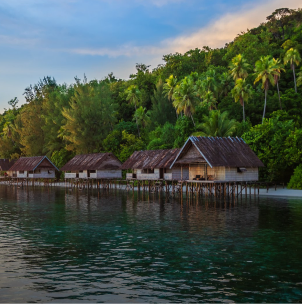
A diver at Cape Kri can swim past dozens of fish species in a single tank and surface able to name almost none of them. Raja Ampat's reefs hold at least 1,320 documented reef fish species, so the useful skill is not memorizing all of them but learning to read a fish by its shape.

Reef fish identification in Raja Ampat works from family to species. Start with body shape, then the mouth, fins and behavior, and leave color until last, since many wrasses, parrotfish and angelfish change color completely as they mature.

Learn five families first (damselfish, butterflyfish, wrasse, parrotfish and surgeonfish) and you can place most of what you see. Diving with people who already know these fish shortens the learning curve, and at Papua Diving Resorts that means Papuan guides and dive managers who are marine biologists.

Why Raja Ampat Rewards Fish Identification

Much of what divers know about Raja Ampat's fish comes from two scientists, Dr. Gerry Allen and Dr. Mark Erdmann, whose surveys built the region's reef fish checklist. In 2012, Dr. Allen logged 374 species on a single dive at Cape Kri, the reef on the doorstep of Sorido Bay Resort.
The wider Bird's Head Seascape holds at least 31 endemic reef fish species, so divers here meet fish found on no other reefs.

Start With the Family, Not the Species

Naming every species underwater is a quick route to frustration, but a recreational diver regularly meets only a few dozen families. Placing a fish in its family takes seconds, and you can narrow it down after the dive.
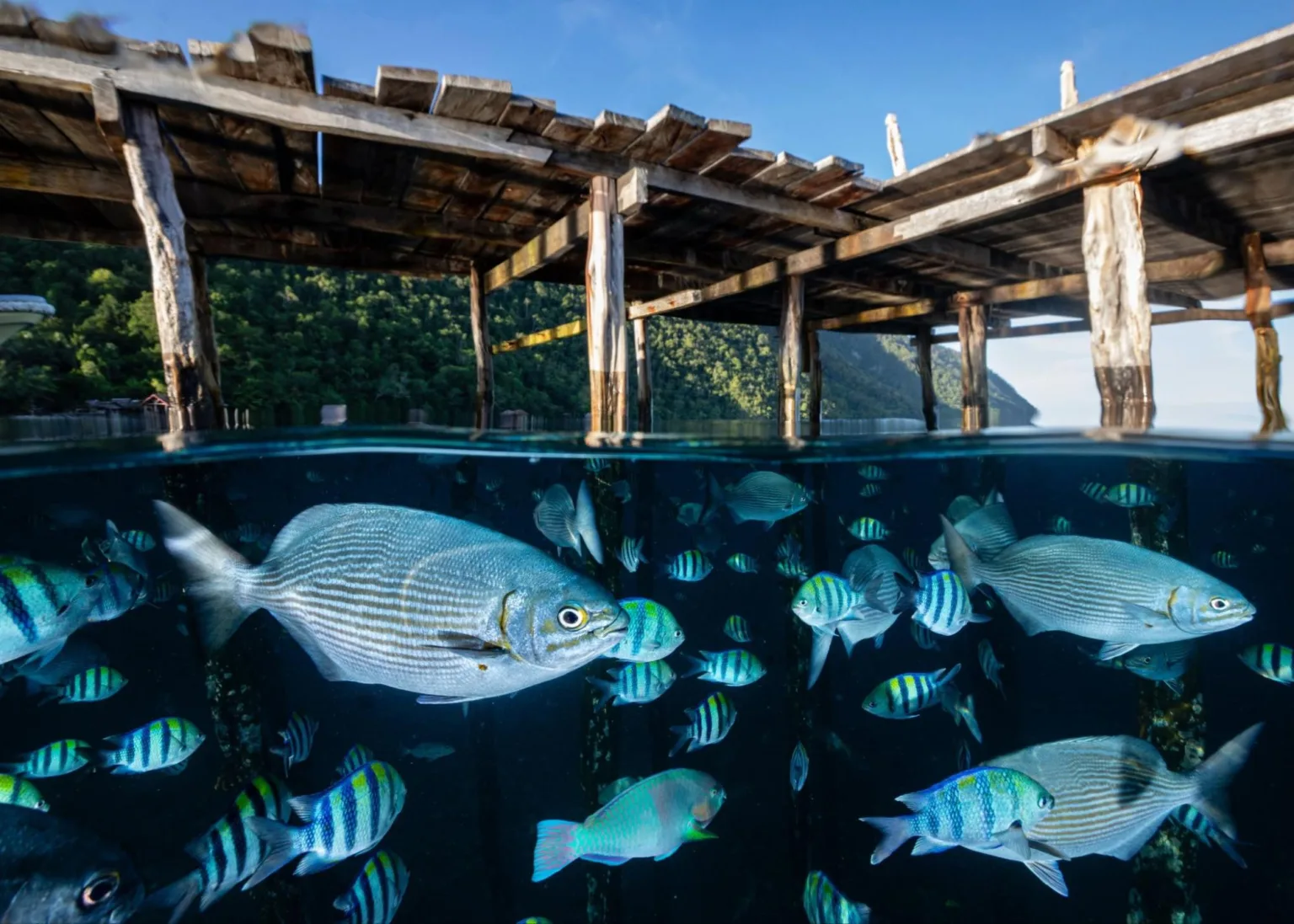
Fish swimming under wooden pier, split underwater view

The rule that makes this work is simple: shape and behavior first, color second. A butterflyfish has a deep, flattened body and a black eye-stripe, whatever its colors, while a parrotfish gives itself away with its beak-like mouth and the sound of it scraping rock.
Habitat helps too, since fish favor different coral types on Raja Ampat's reefs.
The Five-Step Identification Sequence

1. Body Shape

Decide whether the fish is oval or disc-like, elongated, torpedo-shaped or built to rest on the bottom.

2. Mouth

Look for a pointed snout, a beak, a large mouth or a small one. Mouth shape reflects how a fish feeds, so it points reliably to the family.

3. Fins and Tail

Check for a long continuous dorsal fin, a forked or rounded tail, or prominent spines. Wrasses are easy to pick out from a distance because they row themselves along with their pectoral fins.

4. Behavior

Notice whether the fish is schooling, hovering near coral, hiding in crevices, grazing or cleaning other fish, and where you found it, since sand, wall and jetty fish are rarely the same.

5. Color Pattern

Use color to confirm what the first four steps suggest, because one species can look like three different fish across its juvenile, female and male phases.

Reef Fish Families You Will See on Almost Every Dive

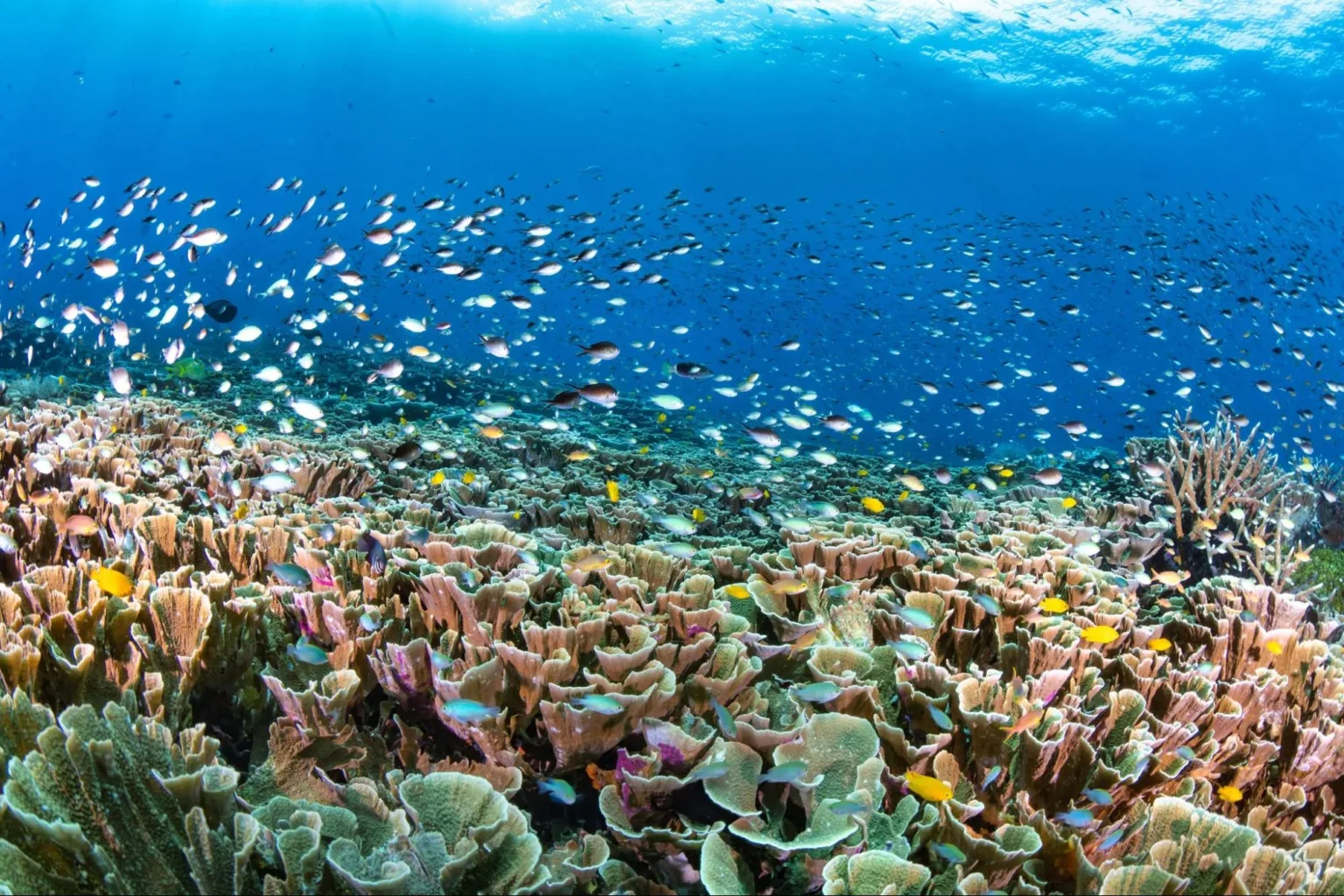
Colorful coral reef with school of tropical fish in blue ocean

These ten groups cover most of the fish you will meet around Kri Island.

Reef Residents

  • Damselfishes: Small and territorial, they hover close to coral or anemones.
  • Butterflyfishes: A deep, flattened body and black eye-stripe, usually in pairs.
  • Angelfishes: Disc-shaped, with a sharp spine on the cheek.
  • Wrasses: Look for the rowing pectoral fins rather than their ever-changing colors.
  • Parrotfishes: Beak-like mouth and audible grazing.
  • Surgeonfishes and rabbitfishes: Oval bodies, with a scalpel-like tail spine on surgeonfish.
  • Groupers: Heavy bodies and large mouths, resting near ledges.
  • Gobies and blennies: Tiny and bottom-perching, best found while macro diving in Raja Ampat.

Open-Water Visitors

  • Snappers and sweetlips: Streamlined, schooling snappers, and sweetlips with thick lips and a high back.
  • Fusiliers and trevallies: Slim, fast fusilier schools and torpedo-shaped trevallies on the reef edge.

Start with damselfishes, butterflyfishes, wrasses, parrotfishes and surgeonfish schools, which together make up most of what you will see.

Raja Ampat Endemics and the Scientists Who Named Them

The Raja Ampat walking shark (Hemiscyllium freycineti), a small epaulette shark that walks across the reef on its fins, lives nowhere else in the wild and regularly turns up after dark on the house reef. Many of the region's smaller endemics were first described by Dr. Gerry Allen and Dr. Mark Erdmann, and their connection with Papua Diving Resorts goes back decades.

Both still visit the resorts and run trips in Raja Ampat to identify fish and search for new species, so the cataloging of these reefs is far from finished.
One of their finds carries a familiar name: the Raja Ampat dottyback (Pseudochromis ammeri), described in 2012, is named after Papua Diving Resorts founder Max Ammer, who invited the survey team that first recorded it.

Leopard Sharks: Watching a Species Return to Raja Ampat

The Indo-Pacific leopard shark (Stegostoma tigrinum) is native to Raja Ampat but had all but disappeared from its reefs, with researchers recording only three between 2001 and 2021. The IUCN lists the species as endangered. Since 2023, the ReShark StAR Project has been working to bring it back, raising pups from aquarium-donated eggs in nurseries in Misool and at the Raja Ampat Research and Conservation Centre (RARCC) before releasing them back into the wild.
So far, the two nurseries have released 79 leopard sharks in Raja Ampat. The RARCC nursery sits at Sorido Bay Resort, and guests of both Sorido Bay Resort and Kri Eco Resort can visit on Saturdays.

Visits are limited because it is an active research project. In the hatchery you can see the sharks as eggs, newborns and juveniles, and once they outgrow the pup tanks they move to a sea pen, where guests can snorkel alongside (without touching the netting) and watch them swim.

Leopard sharks also show why color misleads: juveniles are striped, hence the name zebra shark, while adults are spotted. Wild sightings are never guaranteed, but you can read about the types of sharks in Raja Ampat divers see more often.

Where to Practice Fish Identification Around Kri Island

Current-swept reef edges such as Cape Kri draw trevallies and fusiliers, sheltered coral gardens suit butterflyfishes and damselfishes, and the jetty rubble hides gobies and dottybacks. The locally trained Papuan dive guides at Papua Diving Resorts know these reefs and their fish by sight, and the dive managers at both Kri Eco Resort and Sorido Bay Resort are marine biologists, so they can help you identify the fish and corals you saw on a dive.

After the Dive: Logging and Asking a Marine Biologist

Log what you saw the same day: note the site type, take a side-on photo if you can (the Raja Ampat SEACAM Center supports underwater photographers at the resorts), and record size, depth and behavior. If a fish still has you stumped, bring the photo to the dive managers, or browse the reef identification books kept throughout both resorts.

Learning to read shape and behavior turns a Raja Ampat dive from a blur of color into a reef you can name, and the fastest way to build that skill is a week on the same reefs with guides and marine biologists who already know them. Dive Cape Kri, Mioskon and the Sorido Bay house reef with Papuan guides and marine biologist dive managers who know these fish by name.

Check availability at Sorido Bay Resort and Kri Eco Resort, or email info@papua-diving.com to plan your stay on Kri Island.

Frequently Asked Questions

What Fish Will I See on Almost Every Dive in Raja Ampat?

Damselfishes, butterflyfishes, wrasses, parrotfishes and surgeonfishes turn up on nearly every Raja Ampat dive, and learning these five families first lets you place most of what you see.

How Do You Tell Reef Fish Apart While You Are Underwater?

Work through body shape, mouth, fins and tail, and behavior before you look at color, since many reef fish change color as they grow and shape is a far more reliable clue.

Can You See Leopard Sharks in Raja Ampat?

Leopard sharks are native to Raja Ampat but became very rare, and the ReShark StAR Project has released 79 so far. Guests of Papua Diving Resorts can see them up close at the RARCC nursery at Sorido Bay Resort on Saturdays, although wild sightings are never guaranteed.

Who Discovers New Fish Species in Raja Ampat?

Scientists such as Dr. Gerry Allen and Dr. Mark Erdmann, who compiled the region's reef fish checklists and still run trips in Raja Ampat to find new species.